
Low-Cost Business Automation Software: A Practical Guide
There’s a specific kind of tired that hits you doing the same task by hand for the hundredth time, and I mean the hundredth, not an exaggeration. Copying an order from one system into another. Sending basically the same follow-up email, tweaked a little, to yet another new lead who signed up an hour ago. Manually moving a row in a spreadsheet because a customer finally paid an invoice. None of it’s hard, exactly. It’s just repetitive in a way that quietly eats hours nobody actually budgeted for, and you only notice at the end of the week wondering where the time went.
A lot of small business owners just assume automation’s for companies with real IT budgets, dedicated ops people, software built specifically for their industry with a five-figure price tag attached. That assumption keeps small teams doing manual work for years longer than needed, mostly out of a belief that fixing it would cost more than just living with the annoyance forever.
Not really true anymore, though. Plenty of automation tools get built specifically with small budgets in mind, some genuinely cheap, some free for basic use, no catch really. This guide walks through what low-cost automation software actually does, why it’s worth bothering with even on a tight budget, and how to pick something without wasting money on features you’ll never once touch.
What Does Low-Cost Automation Software Actually Do?
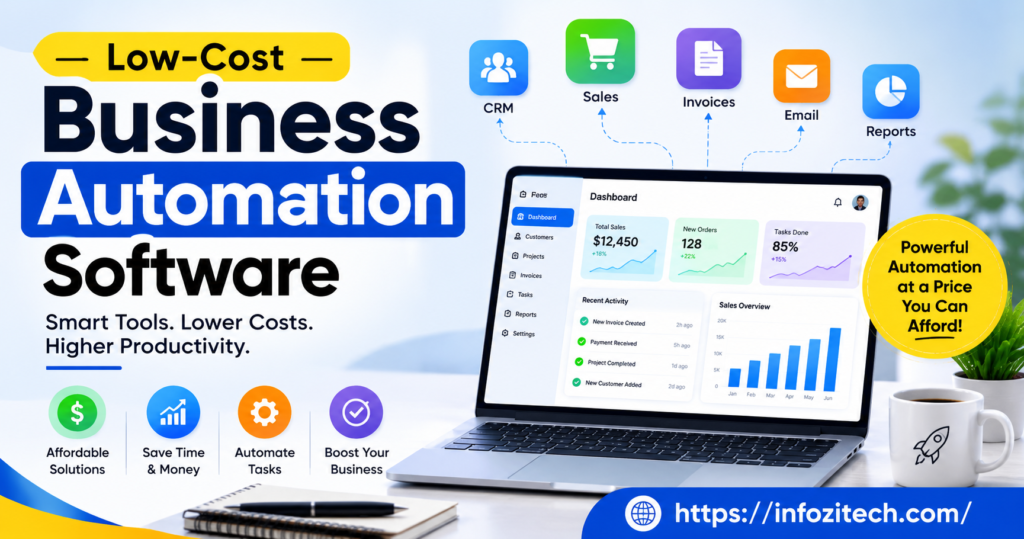
At the core of it, automation software takes a repetitive task and lets a computer handle it based on a trigger you set up one time. Something happens, and the software responds; no person needs to manually step in every single time it repeats.
Take something ordinary: adding a new customer to your email list happens constantly. Without automation, someone has to notice the signup, open the email platform, manually add the contact, sometimes days later if things get busy and it slips their mind. With automation running, the moment somebody fills out a form, they’re added automatically, tagged correctly, maybe even sent a welcome email, all without a single keystroke from anyone.
Worth untangling a few terms that blur together in this space.
- Simple automation tools connect a couple of apps for basic, single-step tasks, like dropping a form submission into a spreadsheet.
- Workflow automation platforms handle multi-step sequences, triggering several actions across different tools from one starting event.
- Built-in automation features live inside software you’re probably already using- email platforms, accounting tools- often at no extra cost whatsoever.
Most small businesses get real value out of the first and third options before ever needing the second. Starting simple usually means starting free, or pretty close to it.
Why Low-Cost Automation Matters for Small Businesses
There’s a common assumption floating around that automation only pays off at scale, once you’re processing hundreds of orders or managing some huge customer list. In reality, it’s kind of backwards. A small business often benefits more, proportionally, since a few hours saved each week matters a lot more when there’s no extra staff around to absorb the workload otherwise.
A few honest reasons this is worth doing even on a small budget.
You get hours back every single week. Tasks that take five or ten minutes each add up fast when repeated dozens of times, faster than people expect. Automating even one or two of these frees up real time for work that actually needs an actual human doing it.
You cut down on small, costly mistakes. Manual data entry’s where typos and missed steps creep in, always. A customer’s email gets copied wrong, an order detail gets transposed somehow. Automation just removes that entire category of human error- gone.
You look more responsive without hiring a single person. A follow-up email sent automatically within minutes of a signup feels way more professional than one sent two days later because someone finally got around to it eventually.
You free up mental space, not just time, which matters more than people give it credit for. Fewer manual steps to remember means fewer things quietly falling through the cracks while you’re juggling everything else, running a small business alone or nearly alone.
None of this needs an expensive platform, not at all. Some of the most useful automation tools out there cost little to nothing for basic small business use.
Common Types of Low-Cost Automation Software
Vendors dress this category up constantly, but for a small budget it really comes down to a handful of practical categories.
Free-Tier Automation Platforms
Plenty of automation tools offer a genuinely usable free tier, enough for a small number of automated workflows each month, sometimes more than you’d think. Good for testing the waters before committing to anything paid, and often enough to cover a small business’s actual needs entirely, no upgrade required.
Built-In Automation Inside Existing Tools
Email marketing platforms, accounting software, and CRMs increasingly bake in basic automation as part of their standard plans now. If you’re already paying for one of these, checking what’s built in before buying something separate can save real money, quickly.
Affordable Standalone Automation Tools
These sit between free tiers and enterprise platforms, usually priced low per month, built specifically for small teams needing more than a free plan offers without needing full enterprise complexity tacked on.
Template-Based Automation Tools
Some platforms offer pre-built automation templates for common small business tasks, saving the time and technical effort of building a workflow from scratch yourself. Useful if you’re not particularly comfortable messing with the technical side of setup.
You don’t need to explore every category deeply. Just figure out which one matches the specific repetitive task currently draining your time right now.
How to Choose the Right Low-Cost Tool
This is usually where people get stuck, since there are dozens of tools all claiming to be the cheapest, easiest option available, and pricing pages don’t exactly make comparisons simple, do they?
Start With Your Single Most Repetitive Task
Don’t try to automate everything at once, tempting as that sounds. Identify the one task eating the most time each week, look for a tool handling that specific job well, rather than shopping for some platform claiming it does everything under the sun.
Check the Free Tier Limits Carefully
A lot of tools advertise “free” prominently while capping usage in ways that actually matter: limited automation runs per month, restricted number of connected apps. Read the real limits before assuming free will cover your needs long term, because it often doesn’t.
Prioritize Tools That Connect to What You Already Use
The best low-cost automation tool plugs directly into software you’re already paying for anyway. Check compatibility with your existing email platform, payment processor, and spreadsheet tools before looking anywhere else at all.
Avoid Overpaying for Volume You Don’t Need
Some platforms price based on the number of automated actions per month, which sounds fine until you check the tiers. If your business runs a modest volume, a cheaper plan with lower limits is often plenty, and upgrading later is usually simple enough if you outgrow it.
Test With a Real Task Before Committing
Set up one actual automation during a free trial or free tier, not some canned demo example, and let it run for a real week of business. Tells you way more than reading a features list ever could.
Setting Up Your First Automation Without Overcomplicating It
Once you’ve picked a tool, resist automating every process in your business at once, all in one go. Trying to build ten workflows in a weekend usually means none of them get tested properly, and mistakes slip through completely unnoticed.
A more realistic setup process looks something like this.
Start with one single automation, just one. Pick the task causing the most friction and build only that workflow first, so you can actually monitor whether it’s working the way you expect.
Test it with real data, not some dummy example that doesn’t reflect anything. Run an actual signup or transaction through the automation, confirm it behaves correctly before relying on it fully for real work.
Keep the first version simple, genuinely simple. A single trigger, a single action, is a fine starting point. Add complexity only once the basic version’s proven itself reliable over time.
Check the results for the first week closely. Automation left unchecked can quietly fail without anyone noticing for a while, sometimes a long while, so a short review period catches problems early on.
Add the next automation only once the first one’s stable. Building gradually keeps the whole system understandable, instead of becoming a tangle of workflows nobody fully remembers setting up anymore.
Mistakes Small Businesses Commonly Make
A few patterns show up over and over when businesses first start experimenting with low-cost automation.
Trying to automate too much too fast. Usually results in broken workflows that go unnoticed because nobody’s actually monitoring more than a couple of new automations at once.
Choosing based on price alone, without checking fit first. The cheapest tool isn’t helpful if it doesn’t actually connect to the software your business already relies on every single day.
Ignoring free tier limits until you hit them unexpectedly. A workflow that suddenly stops running because a monthly limit got reached can cause real headaches if nobody’s watching for it.
Skipping testing before going live. An automation sending the wrong information, or triggering at the wrong time, can create more work than it saves if it’s not properly checked beforehand.
Forgetting to revisit automations over time. A workflow set up a year ago might not match how the business runs now at all. Periodically reviewing what’s still relevant keeps the system useful instead of quietly outdated.
Bringing It All Together
Low-cost business automation software isn’t about needing a big budget or some dedicated tech team standing by. It’s about handing off the small, repetitive tasks quietly eating time every week, so that time can go toward work that actually needs a real person behind it.
Start with your single most repetitive task, choose a tool that connects to what you already use, build gradually rather than trying to automate everything overnight in one burst. The goal was never the flashiest automation platform on the market. It’s whatever quietly gives you back a few hours every week without costing more than it’s actually worth.
Once that first automation is running reliably, adding a second one starts feeling obvious, natural even, and a small business begins operating with a kind of quiet efficiency that used to require a much bigger budget to pull off.



1 thought on “Low-Cost Business Automation Software: A Practical Guide”