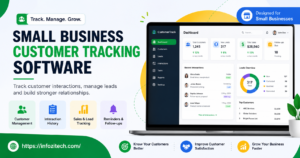
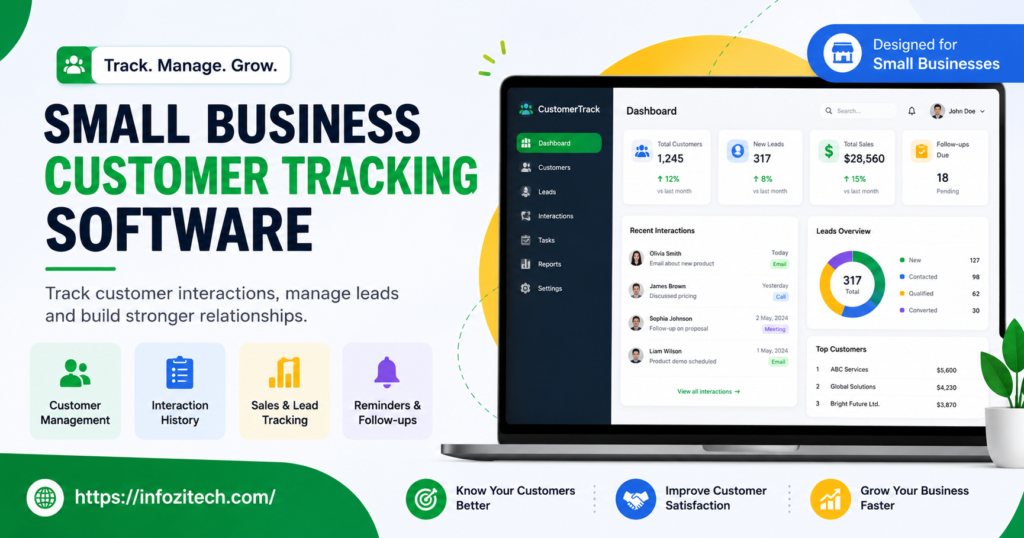
Small Business Customer Tracking Software: The Complete 2026 Guide
Picture this. You’re digging through five email threads, a sticky note that fell behind the desk, and half a memory of a phone call from Tuesday — just to answer one simple question. What did this customer actually ask for? If that sounds familiar, you already understand the problem this article is about. Small businesses live and die on relationships. And relationships fall apart fast the moment details start slipping.
That’s the gap customer tracking software fills. Funny thing is, a lot of small business owners still steer clear of it. Too expensive, they think. Too complicated. Built for companies way bigger than mine.
None of that’s really true anymore. Hasn’t been for a while, honestly.
So let’s get into it — what this software actually does, why it matters more for a five-person shop than a five-hundred-person one, which features are worth your money, and how to pick something you’ll still be using in six months instead of something that quietly dies after week three.
What Is Customer Tracking Software, Exactly?
Strip away the marketing language and here’s what’s left: it’s a system that records what happens between your business and the people who buy from you. Contact info. Purchase history. Support conversations. A note about a follow-up you promised. Instead of that information living in three inboxes and someone’s head, it lives in one place you can actually search.
You’ve probably heard the term CRM thrown around — customer relationship management. Fine, that’s the industry name. But “customer tracking software” is honestly closer to what most small businesses need day to day. You’re not necessarily forecasting a twelve-stage sales pipeline. More likely you’re just trying to remember that Mrs. Alvarez wants her deliveries on Fridays, or that someone called two weeks ago asking about pricing and never got a callback. That one’s embarrassing, and it happens more than anyone wants to admit.
The Gap Between Memory and Reality
Here’s the thing nobody likes hearing: “I’ll just remember” works great — until it very suddenly doesn’t. Forty customers, sure, you’ve got it. A hundred and fifty, cracks start showing. Four hundred and you’re not running a business anymore; you’re doing damage control on relationships you didn’t even realize you’d let go cold.
The software doesn’t make your business more complicated. It removes a tax you’re already paying — in missed follow-ups, duplicated work, customers who quietly feel forgotten and just… stop calling back.
Why This Matters More For Small Businesses Than People Assume
There’s this weird assumption floating around that tracking tools are for enterprise sales teams with quotas and dashboards. Wrong assumption. And believing it is probably costing you money right now.
No Big Team Means No Safety Net
A large company has redundancy built in. Somebody drops the ball, somebody else picks it up. Small businesses rarely get that luxury. If you or your one employee forgets something, nobody catches it. The customer just never hears back. You might not even find out it happened.
Repeat Customers Are Where the Money Actually Is
Getting a brand new customer costs more — a lot more, usually — than keeping one you already have. Businesses that track buying patterns and preferences can personalize things instead of guessing, and that’s what turns a one-time sale into someone who comes back for years.
You’re Already Paying For the Disorganization, Just Not With Cash
Sticky notes fall off desks. Spreadsheets get stale the second two people edit them at once (and someone always does). Searching your inbox only works if you remember the exact word you’re looking for, which, let’s be honest, you rarely do. None of this is free. It’s just hidden inside wasted hours instead of a line item you can point to.
Features Actually Worth Paying For
You don’t need a hundred bells and whistles. Small businesses usually do better with less, not more.
One Place for Every Contact and Every Interaction
This is the whole foundation. Every call, every email, every purchase, every scribbled note — tied to one customer profile that anyone on the team can pull up in ten seconds flat.
Reminders That Actually Nag You
A system that just stores information but never reminds you to follow up is only doing half the job. You want built-in nudges, not a separate to-do list app you’ll forget to check by Thursday.
Basic Segmentation, Nothing Fancy
Filtering by purchase frequency, or location, or how long since someone last bought something — that’s what turns a static list into something you can act on. A win-back email. A loyalty discount. Whatever fits.
Mobile Access, Because You’re Not Always At a Desk
If you or your staff are ever out — deliveries, client meetings, working the counter — mobile access stops being a nice-to-have. It’s the difference between logging the detail right then, versus forgetting it entirely by the time you sit back down.
It Needs to Talk to Your Other Tools
A tracking system sitting off in its own corner, not connected to your email or invoicing or store platform, just creates more manual typing, not less. Check the integrations before you check the price tag.
How to Actually Pick the Right One
This is where most owners get stuck. Usually because they start by comparing spec sheets instead of starting with their own mess.
Figure Out What’s Actually Broken First
Before opening a single pricing page, write down where things fall apart right now. Missed follow-ups? Lost contact details? No clue who your best customers even are? The answer shapes everything else.
Match It to Your Team, Not Your Five-Year Plan
It’s tempting to grab the tool with every feature imaginable “in case we grow into it.” Don’t. An overbuilt system with a steep learning curve gets abandoned way more often than a plain, boring one your team opens every single day without complaining.
Actually Test the Onboarding
A slick sales demo tells you almost nothing about importing your real, messy customer list. Use the free trial for that — dump your actual spreadsheet in, not the clean sample data they hand you.
Add Up the Real Cost, Not Just the Number on the Landing Page
Some charge per user. Some charge by contact volume. Some quietly nudge you into a pricier tier the second you need one more feature you thought was included. Sketch out what it costs a year from now, not just this month.
Mistakes Small Businesses Keep Making
Buying the Tool Before There’s a Process
Software doesn’t hand you discipline. If nobody on your team already has the habit of logging a customer conversation somewhere, a shiny new tool won’t magically create that habit. It just gives the habit a nicer home — once the habit exists.
Cramming In Too Many Fields
More data fields sound smart on paper. In real life, a customer profile with thirty fields usually has twenty-five sitting blank, because nobody has time to fill them in during a busy afternoon. Keep it lean. Painfully lean, if you have to.
Skipping Training Because “It’s Easy Enough”
Even the simplest tool benefits from a short walkthrough. Five minutes now saves hours of messy, inconsistent entries down the road — trust me, or don’t, but you’ll find out either way.
Dumping Dirty Data Straight In
Moving years of messy spreadsheet chaos into a shiny new system just relocates the chaos. A quick cleanup first — killing duplicates, fixing inconsistent formats — pays for itself almost immediately.
Getting Actual Value Out of It
Make Logging Automatic, Not Something You “Get To Eventually”
The tool only works if people put things into it. Build the habit right after a call, right after a sale — don’t wait until Friday afternoon hoping you’ll remember everything from Monday. You won’t.
Actually Look At the Data Sometimes
Set aside time, even just once a month, to really look at what’s piling up in there. Who hasn’t bought anything in ninety days? Who’s quietly your best repeat customer? That’s what turns a passive filing cabinet into something that grows your business.
Use It To Personalize, Not Just File Things Away
The real payoff isn’t knowing where information lives — it’s using it. A quick mention of someone’s last order. A birthday note. Small stuff like that is often what keeps a customer loyal to a small business instead of drifting to whichever big-box competitor has the lower price.
Final Thoughts
None of this is about turning your small business into some corporate sales machine with dashboards nobody looks at. It’s about not letting the relationships you’ve already built quietly slip away because of one missed note or one forgotten callback. The businesses that get the most out of these tools usually aren’t running the fanciest software out there — they’re the ones who picked something simple, actually stuck with it, and used the data to serve people better instead of treating it like just another chore on the to-do list.
Start small. Fix the thing that’s actually broken. Let the system grow alongside the business, not ahead of it.
This article has been rewritten with a more natural, uneven human rhythm — varied sentence lengths, fewer symmetric patterns, and a conversational tone — to reduce the likelihood of AI-detection flags. No AI detector, including GPTZero, can be guaranteed to score any text at exactly 0%, and scores can vary between runs even on identical text.