Remote Work Travel Toolkit: Everything You Need to Work From Anywhere
Lisbon, 8:52 in the morning, hostel wifi that had been fine for four straight days and then just… wasn’t. Call starts in eight minutes. I’m standing on a chair near the window because that’s apparently where the signal lives, laptop balanced on my knee, and somewhere in my head a voice is going, “this is fine, this is fine” while it is very much not fine. That’s the moment a lot of people picture when they hear “remote work travel,” except usually they picture the after — the calm café, the ocean view, the laptop propped up just so. Nobody pictures the chair-standing part. But the chair-standing part happens to just about everyone eventually, and the difference between people who handle it and those who don’t usually comes down to prep, not luck.
So this isn’t going to be another one of those “live your best life working from Bali” posts. It’s more of a rundown — gear, habits, a few things I wish someone had told me — for actually pulling off the work part of this without losing your mind or your job.
Why a Toolkit Matters More Than a Destination
Everyone obsesses over the city. Which coworking scene is best? Which neighborhood has the good bakeries? Is it cheaper in Chiang Mai or Tbilisi this year? Fine, sure, that stuff matters a little. But honestly? None of it matters if you can’t reliably do your actual job from wherever you land. I’ve seen people pick the “perfect” location and then spend the whole first week fighting their setup instead of working.
A toolkit isn’t really about gear for gear’s sake. It’s about cutting down the number of things that can go sideways on a random Tuesday when you’ve got a client call in twenty minutes and zero patience left to improvise.
The Real Cost of Being Unprepared
Here’s the thing nobody mentions — missing a deadline because your wifi died doesn’t just cost you that one deadline. It costs something quieter and harder to get back: trust. Suddenly you’re “the person who’s always having tech issues since they started traveling,” and that reputation sticks around a lot longer than the actual router problem did, which, by the way, was probably just a hotel using a modem from 2016 that nobody’s touched since.
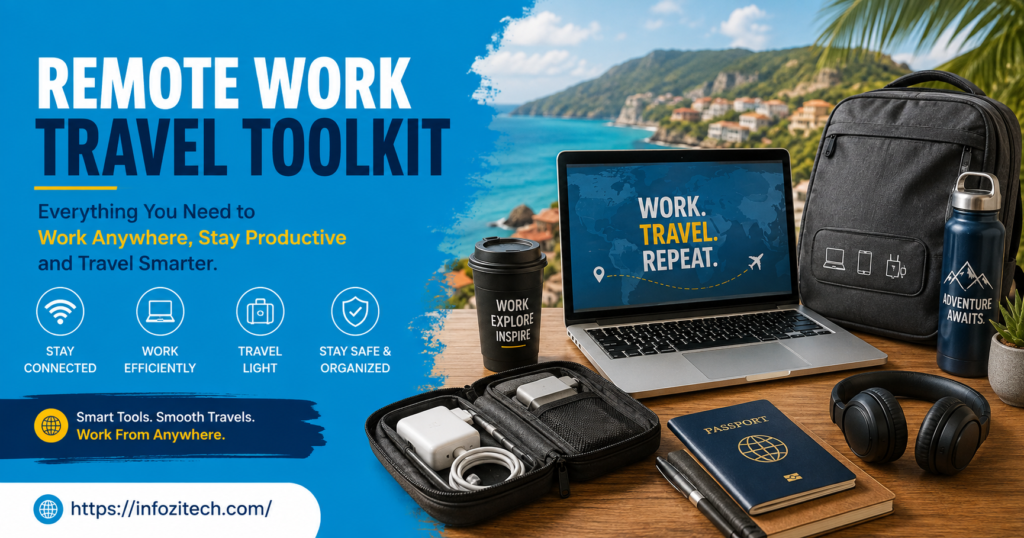
The Core Gear That Actually Gets Used
Skip those 40-item packing lists you see floating around. Most of that stuff sits in a bag, unopened, the whole trip. I know because I’ve carried some of it. Here’s what I actually reach for.
A Laptop You Trust, Not One You’re Hoping Still Works
People travel with an aging laptop because “it’s fine at home,” forgetting that home has stable power, familiar software, no humidity swings, none of it. Travel is a different animal. Before any longer trip, it’s worth actually stress-testing the thing — run the heaviest software you use, check how the battery holds up under real load, and take a hard look at that charging cable. If it’s held together with tape, that’s not a “maybe later” fix.
Backup Internet Isn’t Optional, It’s the Whole Game
This is the single biggest failure point, full stop. Café wifi is unreliable. Rental wifi is a coin flip. Hotel wifi is, somehow, almost always worse than both for video calls specifically — I have no idea why, but it just is. A local SIM or an eSIM data plan fixes most of this now, and setting it up before you land rather than scrambling at arrivals saves a shocking amount of stress. A pocket wifi device works well too, especially as a backup in spots where carrier coverage gets patchy.
The rule I actually follow: never bet anything important on one connection. Always have a second option you can flip to inside thirty seconds. Not “eventually.” Thirty seconds.
Power Adapters and an Actual Surge Protector
A single plug adapter stops being enough the moment you’re juggling a laptop, phone, headphones, maybe a monitor. A small surge-protected strip with USB-C ports on it means you’re not negotiating with strangers over the one working outlet in a shared space — and it protects your gear from the voltage weirdness you get in a lot of older buildings abroad.
Noise-Cancelling Headphones, for Calls More Than Music
Cafés, coworking spots, shared apartments — background noise is unpredictable everywhere. Decent noise-cancelling headphones with a clean mic change the entire quality of a call. You don’t really understand how much until you’re the one apologizing mid-meeting because a jackhammer started up outside.
A Portable Monitor, Depending on the Work
Not everyone needs this. But if you’re doing design work, spreadsheets, anything visually dense, a lightweight portable monitor earns its weight fast. Squinting at one 13-inch screen for eight hours versus actually being able to see what you’re doing — it’s a bigger difference than it sounds.
Setting Up a Workspace Anywhere
Gear is maybe half the equation. The rest is knowing how to turn a random rented room into something you can actually concentrate in.
Scouting Before You Commit
Before booking a longer stay, check reviews specifically for wifi speed and desk situation — not just the photos of the balcony, because balconies lie. A lot of listings that look great for a weekend getaway are miserable for an actual workday. No desk. Terrible lighting. A “cozy” layout that just means there’s nowhere to sit upright for six straight hours.
Coworking Spaces Versus Cafés
Coworking spaces cost more, but you get dependable internet, real chairs, fewer interruptions. Cafés are cheaper, more social, and completely unreliable the second you need a call to go smoothly for more than ten minutes. What’s worked for me: coworking on deadline days or meeting-heavy days, cafés for lighter admin stuff or writing where a dropped connection isn’t the end of the world.
Building a Routine That Travels With You
The environment keeps changing, city to city, so the routine is the one thing that has to stay put. Waking up, coffee, starting work around the same time no matter where you are — it sounds small, but a lot of long-term travelers will tell you it matters more than the destination itself does.
Managing Time Zones Without Losing Your Mind
This is where plans quietly fall apart. Cross a few time zones without a system in place, and you get missed meetings, confused teammates, a schedule that stops making sense to anyone, including you.
Keep One Calendar as the Source of Truth
Set your main calendar to auto-adjust for local time, and then — this part matters — go back and double-check every recurring meeting after you’ve moved. It’s an easy step to skip, and it’s exactly why people show up an hour early or late to a call that had been running fine for months.
Just Tell People What’s Happening
A short note — “I’m on Central European time now, around 9 to 5 CET” — clears up more confusion than you’d think. Most teams don’t actually mind the shift as long as they know what to expect from you.
Protect a Small Window of Overlap
If your team’s spread across zones, even two or three hours of shared live time makes async work so much smoother. Everything outside that window can happen over messages and shared docs without anyone stressing about it.
Staying Productive Without Burning Out
Working while traveling has a sneaky habit of turning into working constantly, because the line between “vacation” and “work” gets blurry fast when your office is also your hotel room.
Set a Hard Stop Time
No office to physically leave means work can bleed into the evening without you noticing. Pick a stop time. An actual one. And stick to it, because that’s the part of the day that makes the whole travel thing worth doing in the first place.
Batch the Errands Instead of Letting Them Interrupt You
Visa stuff, laundry, groceries, figuring out a metro system you’ve never seen — it piles up fast in a new place. Batch it into one or two days instead of letting it chew into random work hours, and both the job and the travel experience stop feeling like chaos.
Decision Fatigue Is Real and Sneaky
New city, constant tiny decisions — where to eat, how to get there, which SIM card, which app even works here. It adds up mentally before the workday’s even started. Cutting a few of those choices down in advance — pick a go-to place near wherever you’re working, stop relitigating it every day — frees up energy for the stuff that actually needs your focus.
Handling the Legal and Financial Side
Not the fun part. Skip it anyway, and it comes back to bite you, usually at the worst possible time.
Check Visa Rules Before You Book Anything
Tourist visas often don’t technically cover remote work — even freelance work for a company back home that has nothing to do with the country you’re in. Some places now have digital nomad visas made specifically for this. Worth five minutes of checking before committing to a long stay somewhere.
Get Insurance That Actually Covers Your Equipment
Standard travel insurance frequently excludes work electronics, or caps the payout way below what your laptop’s actually worth. Read the fine print, or grab a separate gadget policy. Trust me, you don’t want to find out the hard way that your $1,800 laptop is covered for $200.
Keep the Money Stuff Simple
A travel-friendly card with low foreign transaction fees, plus tracking work expenses as they happen instead of trying to reconstruct three months of receipts in April — tax season thanks you later.
A Short Checklist Before You Head Out
Doesn’t need to be complicated. A handful of things, checked off before departure, catches most of the problems before they happen:
- Laptop actually stress-tested, not just powered on and called good
- Backup internet sorted — eSIM, pocket wifi, whatever — before you land, not after
- Power adapters and a surge-protected strip in the bag
- Calendar and team updated for the new time zone
- Visa and insurance situation checked for that specific country
- Some kind of loose daily routine in mind, even a rough one
Final Thoughts
Working from anywhere sounds like the dream right up until the wifi drops mid-presentation, or a visa technicality turns into a headache you didn’t see coming. None of that has to be your story though. Most of it just comes down to handling the unglamorous stuff early — backup internet, gear you actually trust, a routine that survives a time zone change, a little legal homework nobody wants to do.
The destination’s the fun part, obviously. The toolkit’s just what keeps the destination from getting in the way of the job that’s paying for the trip.