
Smart Luggage Technology Guide: Everything You Need to Know Before You Buy
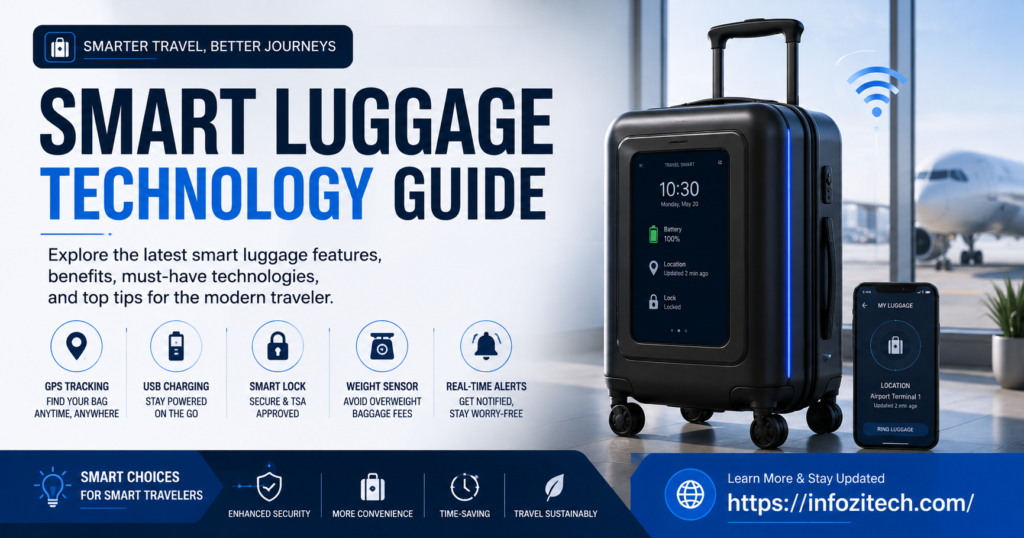
I almost missed a connecting flight in Istanbul once because my phone died right as I needed the boarding pass on screen. Stood there at the gate, panicking, borrowing a stranger’s charger cable for four minutes just to get enough juice to pull it back up. Small thing. Stuck with me anyway. That’s basically the whole reason smart luggage exists — not because anyone needed a suitcase that talks to an app, but because travel has a hundred tiny failure points like that one, and somebody figured out you could bolt a battery or a tracker onto a bag and fix a few of them.
So that’s what this guide is. Not a hype piece. Just: what smart luggage actually does, which parts are worth your money, which parts are nonsense, and how to pick something that fits how you personally travel instead of whatever the product page is selling you.
What Is Smart Luggage, Exactly?
At the most basic level it’s a suitcase or bag with electronics built in — could be a battery pack, could be a GPS chip, could be a fingerprint lock, sometimes all three crammed into one shell. Nothing magical about the concept. Manufacturers looked at the stuff travelers complain about most (lost bags, dead phones, fumbling with locks half-asleep at 5 a.m.) and started designing around those specific annoyances instead of just making a bigger or lighter box.
Why This Category Took Off
A few things lined up at once. Phones got strong enough to act as a remote for basically anything, including a suitcase. GPS and Bluetooth chips got small and cheap, so cramming one into a handle stopped being a huge engineering problem. And airlines — let’s be honest — have not exactly built a reputation for careful baggage handling, so people started wanting a way to track their own stuff instead of trusting the system.
Core Features Found in Smart Luggage
Here’s the thing nobody tells you upfront: hardly any bag has every feature. Which honestly works in your favor once you realize it, because it means you can shop by what YOU need instead of paying for a suitcase loaded with stuff you’ll never touch.
GPS and Bluetooth Tracking
This is the headline feature, the one everyone thinks of first. A small chip inside the bag, and an app on your phone shows roughly where it is.
GPS versions work over real distance — doesn’t matter if your bag ends up on the wrong continent, you’ll still get a signal (assuming it has power, which is its own can of worms). Bluetooth trackers are different. They lean on other people’s phones nearby to relay location, which sounds sketchy but actually works surprisingly well in places packed with people, like an airport terminal. Take that same tracker out to somewhere rural though and it basically goes dark.
Worth mentioning: a lot of brands have quietly moved away from built-in GPS chips and toward removable Bluetooth tiles instead. Not because Bluetooth is better, necessarily — it’s because airline battery rules got stricter and a sealed-in GPS unit with its own battery became a checked-bag headache.
Built-In Battery Packs
External charging port, battery hidden inside the shell. You plug your phone in mid-layover instead of hunting for one of those cursed airport outlets that’s always already taken. This was one of the first smart features to actually catch on and, honestly, it’s still one of the most useful ones — no learning curve, just works.
Catch is the battery has to be removable if you’re checking the bag. Airlines don’t allow loose lithium batteries in checked cargo, full stop, so if the battery’s sealed in and can’t come out, that suitcase is carry-on only whether the brand advertises that clearly or not (some don’t).
Digital and Biometric Locks
Combination locks feel almost old-fashioned next to what’s out now — app-controlled locks, fingerprint scanners, locks that just pop open when your phone’s within a few feet. Convenient, sure. Some also ping your phone if someone messes with the latch while you’re not looking, which is a nice bonus even if it’s not bulletproof security.
Built-In Scales
Small thing, saves real money. A digital scale built into the handle, you lift the bag a couple inches, a number pops up. No more guessing whether you’re two pounds over and about to get hit with a fee at check-in while a line forms behind you and everyone’s staring.
Proximity Alerts and Anti-Theft Sensors
Bag wanders too far from your phone, app buzzes at you. Good for catching a suitcase you left under a cafe table, or, worse, one someone’s actively walking off with. Not a real security system — think of it as a smoke alarm, not a vault door.
App Connectivity and Smart Features
Honestly the app is doing most of the actual work here. Location, battery percentage, lock history, sometimes even a rough check against a specific airline’s carry-on size limits before you even leave the house.
Types of Smart Luggage on the Market
Hard-Shell Smart Suitcases
Most common shape you’ll see. Polycarbonate or ABS shell, electronics tucked into the frame or handle. Tends to hold up better against rough handling and weather, and the rigid shell makes it easier to hide a battery or lock securely without it feeling flimsy.
Soft-Shell Smart Bags
Trades some of that toughness for flexibility and usually more outside pockets. Smart features here tend to stick to tracking tags and charging ports — a soft shell just isn’t built to hold a digital lock the same secure way a hard case can.
Smart Backpacks and Carry-Ons
Not every smart bag rolls. Backpacks now show up with USB ports, RFID-blocking pockets, built-in trackers — popular with people who go straight from a commute to a flight without switching bags.
Add-On Tracking Devices
Don’t want to replace your suitcase yet? Fair. Standalone Bluetooth or GPS tags slide into an existing pocket and connect to the same kind of app, so you get most of the tracking benefit without buying a whole new bag.
How to Choose the Right Smart Luggage for You
Match Features to Your Travel Habits
Somebody checking bags on long international routes needs different things than someone doing quick weekend carry-on hops. If you basically never check a bag, a sealed non-removable battery isn’t really a dealbreaker for you. If you check bags constantly, though, put removable batteries and reliable tracking above everything else on your list.
Check Airline Battery Regulations
This one gets skipped more than it should. Most major airlines want any lithium battery in checked luggage to be removable, usually capped around 100 watt-hours. Look up the actual rules for the airlines you fly most before buying — otherwise you might end up with a great-looking bag that becomes a fight at the check-in counter.
Consider Durability, Not Just Tech
It’s still a suitcase underneath all the electronics, and it still has to survive baggage handlers throwing it around and rolling across cracked tarmac. Check the wheels, check the zippers, check the shell material — same scrutiny you’d give any regular bag. Fancy tech means nothing if the thing falls apart after three trips.
Weigh App Reliability
The tracking feature is only as good as the software behind it. Go read recent reviews — actual recent ones, not the ones from launch — specifically about how the app performs. Smaller or newer brands sometimes struggle here, and worse, some just shut down the app entirely a couple years later, leaving you with an expensive suitcase that quietly stopped being smart.
Think About Long-Term Support
This category is young. Not every company selling a smart suitcase today will still be around, or still updating the app, in three years. Sticking with an established brand cuts down the odds you end up with hardware that outlives its software.
Common Smart Luggage Mistakes to Avoid
Buying Based on Marketing Alone
Product pages always show the best-case version of every feature. Skip past that and dig into independent reviews, especially ones that talk about real-world use — crowded airports, long international routes, actual failure scenarios, not just unboxing videos.
Ignoring Weight
Weird irony here: some smart suitcases are heavier than a regular one because of all the added electronics, and that eats into your weight allowance before you’ve packed a single sock. Check the empty weight closely if you’re already cutting it close on your airline’s limit.
Forgetting About Battery Removal Rules
Worth repeating because it trips people up constantly — buying a bag with a sealed battery, then getting stopped at check-in because the airline won’t take it in the hold. Confirm removability before you buy, not after.
Overpaying for Redundant Features
If you already carry a solid portable charger and your phone battery’s fine, do you really need a built-in luggage battery too? Be honest about what you’ll actually use. Otherwise you’re just paying extra for weight and complexity that sits there doing nothing.
The Future of Smart Luggage Technology
Where this is headed, probably, is less about bolting on more gadgets and more about tighter integration — closer ties with airline apps for real baggage status updates, Bluetooth tracking networks that start rivaling GPS accuracy in populated areas, lighter battery setups that meet airline rules without losing charging power.
Sustainability’s creeping into the conversation too. A few brands are experimenting with recycled shell materials, and some are moving toward modular designs — so if your tracker dies or the battery wears out, you replace that one part instead of tossing the entire suitcase.
Final Thoughts
None of this is about turning a suitcase into a gadget for the sake of having a gadget. The good versions of smart luggage solve real, specific problems — not knowing where your bag ended up, running out of phone battery at the worst possible moment, getting blindsided by an overweight fee. Figure out honestly which of those actually happen to you, check the battery rules for your airlines before buying anything, and pick a brand likely to still be supporting its app a few years down the line.
Treat it like any other gear purchase, really. Function first, flash second. Read the reviews from people who actually traveled with the thing, and let your own habits — not the marketing — decide which features earn a spot in your bag.