
AI-Assisted Healthy Lifestyle Planning
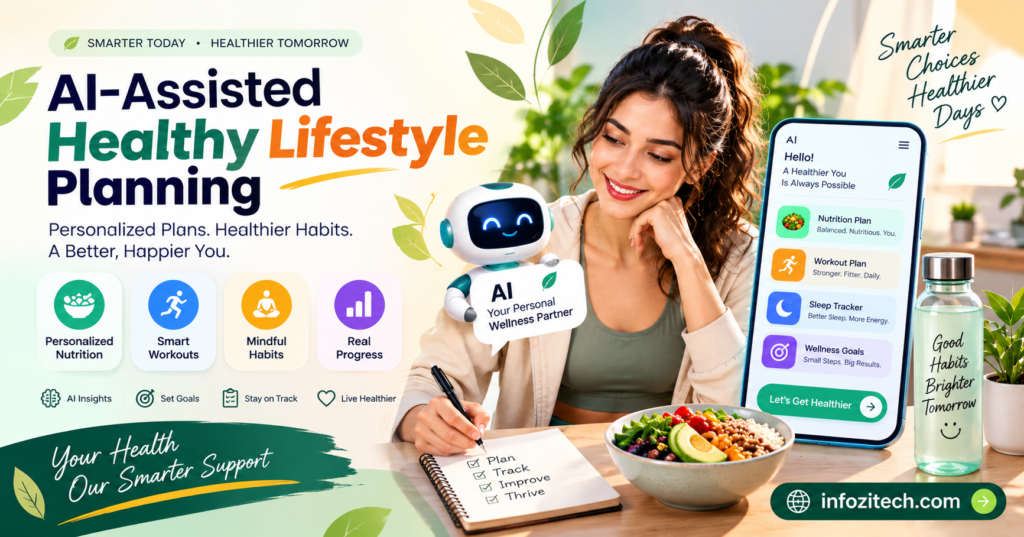
My friend Priya spent something like three years cycling through diet plans. A spreadsheet she built herself and abandoned in two weeks, flat. A magazine meal plan. One of those apps that just gives you 1,500 calories and a shrug. Then last year, half as a joke, honestly, she started using one of these AI planning tools. Six months later she’s still on it. Not because it’s magic; she’d be the first to tell you that. Just because it kept adjusting when literally nothing else she’d tried ever did.
That’s sort of the whole story with AI-assisted healthy lifestyle planning right now. Not some huge leap forward. Just something that bends instead of expecting you to bend to it, which sounds obvious when you say it out loud, but somehow almost nothing before this actually did that. A meal plan from a magazine has no idea you hate cardio. A workout PDF a friend forwards doesn’t know your knees have opinions about running, or that you’re allergic to shellfish, or any of it. These tools are trying to fix that one specific thing. Whether they actually do depends a lot on how you use them.
What AI-Assisted Healthy Lifestyle Planning Actually Means
Strip the buzzwords off, and it’s this — software taking your specific data, your goals, whatever constraints you’ve got, and building or adjusting a plan around that instead of handing you something generic built for nobody in particular. That’s really the whole difference from an app that gives everyone the identical template regardless of who’s on the other end of it.
The “AI” part shows up in a few places, usually. Pattern recognition — the tool notices you keep skipping Tuesday workouts, so eventually it just stops scheduling anything heavy that day, quietly, without you asking. Adaptive recalculation, where the plan shifts because you logged bad sleep or skipped a meal instead of stubbornly plowing ahead with numbers that don’t make sense anymore. And recommendation generation, suggesting meals or workouts based on what’s actually worked for you specifically, not some generic ranking of “healthy foods” pulled from nowhere.
Where the Data Actually Comes From
Worth understanding this part before trusting any of it blindly, because these systems are only as good as what’s feeding them.
Some pull straight from wearables. Sleep, heart rate, steps, sometimes stress stuff from heart rate variability. Some are entirely manual — you’re logging meals and workouts and mood yourself, and the AI’s just doing pattern-spotting on top of whatever you hand it. A growing number blend both, cross-checking what you say against what the watch actually recorded. This catches gaps people don’t even realize exist. Saying you slept fine when the watch is very clearly disagreeing with you.
Why This Beats Just Googling “Healthy Meal Plan”
A static plan doesn’t know a single thing about you. It’s built for some imagined average person who, statistically, doesn’t exist. A good AI-assisted plan actually shifts with what’s happening in your actual life — rough week at work, minor injury, a stretch of bad sleep. That responsiveness is basically the entire value here. Not that it’s smarter than a nutritionist, because it isn’t, not really. Just that it’s paying attention constantly in a way no human coach can manage for what most people are willing to pay.
Where This Actually Helps
Easy to be cynical about AI wellness tools; there’s a lot of noise, a lot of apps that are basically a spreadsheet with a chatbot glued on top. But some of the real use cases hold up.
Killing the Decision Fatigue
Deciding what to eat, when to train, how to adjust when plans go sideways — exhausting, doing that from scratch every day. A decent AI planner just takes a chunk of that off your plate. Literally tells you what today looks like based on everything it already knows. People who struggle less with motivation and more with the sheer mental load of planning tend to get the most out of this specific part.
Catching Patterns You’d Never Spot Yourself
This is where it earns its keep, honestly. A person might notice after months that their energy tanks on days they skip breakfast, maybe, if they’re paying close attention. An AI system flags that in a few weeks because it’s actually tracking the correlation instead of relying on fuzzy memory. Same thing with a workout that keeps getting skipped after a certain kind of stressful day. Or sleep dipping after specific evening habits nobody consciously connected.
No Awkward Conversation Required
Anyone who’s had a human coach knows that small dread of admitting you didn’t follow the plan this week. An AI doesn’t judge. It just recalculates and moves on. Small thing, sounds small anyway, but for a lot of people it removes an actual barrier — the shame spiral after falling off a plan that usually ends in quitting entirely instead of just adjusting and continuing as if nothing happened.
Where It Falls Short. Because It Does.
None of this holds up if the picture stays rosy the whole time, so worth being straight about the limits here.
It Doesn’t Know What It Doesn’t Know
An AI system sees exactly what you give it, or what a device captures, and nothing else. No idea about the fight with your partner that killed your appetite. No idea about the medical thing you haven’t told anyone, let alone an app on your phone. Plans built on incomplete data are still guesses. Just guesses dressed up to look more precise than they actually are.
Medical Nuance Gets Flattened Fast
Most of these tools are built for general wellness, not for people managing real medical conditions, and the line between those two blurs quicker than people expect. Someone with diabetes, a thyroid issue, or a history of disordered eating needs guidance; a general planning tool just isn’t built to weigh. This is the part where an actual doctor or dietitian still matters. No clever software replaces that conversation, full stop.
Over-Optimization Becomes Its Own Thing
Hand some people a tool that tracks everything, adjusts constantly, and it stops helping and starts feeding an unhealthy obsession with numbers and streaks and scores. The same responsiveness that helps one person tips into something genuinely unhealthy for someone else, especially anyone with a history of anxious tracking around food or exercise.
How to Actually Use These Tools Well
If the goal’s getting real value instead of downloading one more app that dies quietly on your phone’s second home screen, a few things make an actual difference.
Feed It Honest Data, Not Aspirational Data
Tempting to log the workout you meant to do. Or round meals toward what sounds healthier than what you actually ate. The tool can’t adjust for a reality it never sees, and the whole thing collapses the second the input turns into fiction. Logging the skipped workout, the real one, matters way more than logging the imaginary perfect version of your day.
Treat Suggestions as a Draft, Not a Verdict
An AI-generated plan is a reasonable first pass. Not gospel. If a suggested workout feels wrong for your body that particular day, or the meal plan doesn’t match what’s actually sitting in your fridge, adjusting isn’t failure. It’s literally the whole feedback loop the thing is supposed to run on in the first place.
Keep an Actual Human in the Loop for Medical Stuff
If there’s a real condition involved, an AI tool works best as a supplement to a doctor’s guidance. Not a replacement for it, no matter how confident the app sounds about your numbers. Bring its suggestions into that conversation if they’re useful, sure, but don’t let software’s confidence substitute for someone who actually knows your full history.
Watch for the Warning Signs of Over-Tracking
If checking the app starts causing anxiety instead of relieving it, that’s the moment to step back, not push harder. A tool meant to cut decision fatigue shouldn’t become its own source of stress. If it does, better to notice that early than after months of it quietly making things worse in the background.
Where This Is Probably Headed
Direction seems fairly obvious even now. More integration with actual medical data. Tighter feedback loops with wearables. Probably more nuanced handling of emotional and mental factors instead of just calories and steps. Some tools already experiment with mood tracking alongside food and exercise, treating a rough week emotionally as just as relevant as a rough week nutritionally, which honestly makes sense once you think about it for more than a second.
None of that changes what’s underneath all of it, though. The whole point of AI-assisted healthy lifestyle planning is responsiveness — a plan bending around an actual life instead of demanding the life bend around some plan someone wrote in advance. The tech just makes that bending happen faster, with less manual effort, than doing it all yourself with a notebook and a lot of stubborn willpower.
Final Thoughts
AI-assisted healthy lifestyle planning isn’t a shortcut around effort or professional guidance, and it’s not the miracle a lot of the marketing implies either. It’s good at one specific thing — adjusting to what’s actually going on in your life instead of sticking to a plan built for a version of you that never existed. Feed it honest information. Treat the suggestions like a draft, not an order. Keep a real doctor involved for anything medical. Do that, and it stops being a gadget and turns into something quieter, an assistant that just keeps the plan realistic week after week, without you rebuilding it from zero every single time life gets in the way. Which it will. It always does.



2 thoughts on “AI-Assisted Healthy Lifestyle Planning”