
Office Worker Energy Optimization: How to Stay Sharp All Day Without Burning Out
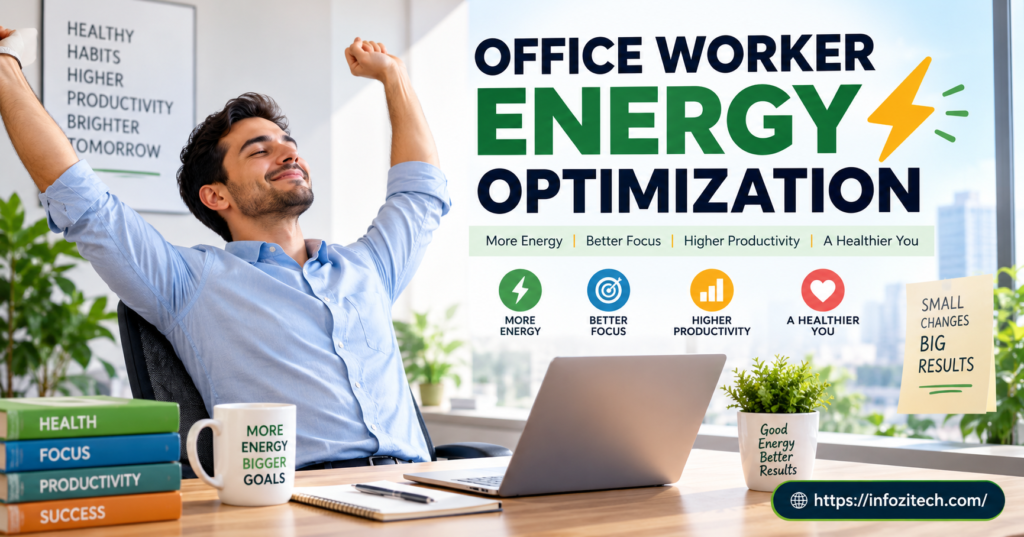
So I used to think it was just me. Every single day, around 2:30, sometimes closer to 3, my brain would just check out. Not tired exactly. More like — gone. I’d sit there staring at an email, same four lines, not absorbing a word of it, and I genuinely thought something was wrong with my discipline. Total nonsense, as it turns out. That crash had nothing to do with willpower. It’s what happens when a body built for movement gets folded into a chair under fluorescent lights for eight hours straight, meeting after meeting, and somehow we act surprised when it doesn’t hold up.
Energy at work moves. That’s the part nobody tells you. It’s not a tank you fill once in the morning and drain down to empty by five — it bends and shifts depending on what you ate two hours ago, whether you stood up recently, what the lighting in the room is doing to you without your permission. None of this is a hack. I’m allergic to that word at this point. It’s just — paying attention to what’s actually draining you instead of assuming it’s a personal failing every single afternoon.
Why Your Energy Crashes During the Workday
You kind of have to know what’s causing this before you can do anything about it, and it’s not random, even though it feels that way when you’re in the middle of it.
The Mid-Morning Slump
Ten or eleven rolls around and there’s this weird little wall. Not hunger, not really boredom either. Usually it’s the back half of a blood sugar spike from whatever you ate at 7 AM, or the cortisol from waking up finally wearing off. Two cups of black coffee and nothing else for breakfast? That dip is going to hit like a wall, and it’s going to hit hard.
The 2 PM Wall
Almost everyone deals with this one, which is oddly comforting once you realize it. There’s a circadian dip baked into early afternoon regardless of what you had for lunch. Add a heavy meal on top, a dim windowless conference room, and now you’ve got that classic fog where people are nodding along in a status meeting without absorbing a single word of it.
Decision Fatigue
Nobody talks about this one enough, honestly. Physical tiredness gets all the press, but mental fatigue might be worse. Every little decision — answer this email or that one first, do I need to be on this call, how do I phrase this Slack message so it doesn’t sound rude — pulls from the same limited reserve. By four in the afternoon, that reserve is basically fumes, and that’s exactly why picking a font size suddenly feels like defusing something dangerous.
Fixing Your Morning Routine First
The way a day starts shapes how it ends more than most people give it credit for. A rushed morning, all caffeine, zero substance — that’s basically setting up your own 11 AM crash before you’ve even opened your laptop.
Hydrate Before You Caffeinate
Wake up after six or eight hours asleep, and you’re already a little dehydrated, and dehydration feels almost identical to fatigue, which is the annoying part. Tricks you every time. One glass of water before that first coffee actually does more for real alertness than a second shot of espresso would. Sounds too simple. It’s true anyway; I’ve tested this on myself more times than I want to admit.
Get Real Light Early
Natural light in that first hour after waking sets your internal clock, and that clock decides a lot about when you’re sharp and when you’re mush later in the day. Five minutes outside does it. Doesn’t need to be a whole walk — standing near a bright window while you check your first emails counts.
Eat Something With Substance
Skip breakfast, or grab something that’s basically sugar wearing a food costume — a pastry, one of those syrup-disguised-as-coffee drinks — and you’re setting up a spike, then a hard drop about an hour later. Eggs. Yogurt. Peanut butter on toast, whatever. Something with protein or fat tends to hold you steadier through the morning.
Eating for Steady Energy, Not Just Fullness
What you eat during the day matters less for how full your stomach feels and a lot more for what your blood sugar is quietly doing in the background. Big swings there? One of the most common, and honestly one of the easiest, causes of that afternoon fog.
Put Protein First at Lunch
A lunch that’s mostly carbs — big plate of pasta, sandwich on soft white bread — tends to spike you hard and then yank everything back down about sixty minutes later. Lead with protein and vegetables instead. Treat the carbs like a side character, not the main event. The afternoon tends to feel a lot more level that way.
Watch the Snack Drawer
That 3 PM candy bar feels like it’s helping. It is not helping. It’s usually the actual reason for the 3:45 crash that shows up right after. Nuts, some cheese, an apple with almond butter — anything combining protein or fat with a little carb holds up way better than straight sugar does.
Don’t Underestimate Caffeine Timing
Caffeine’s half-life sits around five or six hours. Which means that 3 PM coffee you thought was rescuing your afternoon is still partly floating in your bloodstream at 9 PM, quietly wrecking your sleep, and you don’t even connect the two. Bad sleep tonight is guaranteed to be tomorrow’s energy problem. Moving your last coffee earlier, even by two hours, is one of those changes that seems small and ends up mattering way more than it should.
Movement: The Most Underused Energy Tool at a Desk
Sitting for hours wears on more than your back and hips. It dulls thinking too. Blood flow slows, and along with it, the oxygen and glucose your brain actually needs just to stay switched on.
Micro-Breaks Beat Marathon Sitting
Standing for even sixty seconds every half hour — refilling water, stretching, wandering to another room for no real reason at all — keeps circulation moving in a way that one long lunchtime walk just can’t fully replace. Doesn’t need to look like exercise. Just needs to interrupt the stillness, over and over, all day long.
The 90-Minute Rhythm
Attention runs in cycles naturally, something like ninety minutes of decent focus followed by a dip. You can fight the dip with more coffee. That’s usually a losing battle, though. Better to treat it as a cue instead — a short walk, a stretch, staring out a window like you’re deep in thought (you’re not, you’re just resetting) — and the next focus block tends to come back sharper for it.
A Short Walk Beats a Long Nap
Napping mid-shift isn’t realistic for most office jobs, obviously, unless your job is unusually generous. But a ten-minute walk, outside if the weather’s cooperating, does something surprisingly close. Resets attention. Cuts the fog that builds after staring at a screen for two hours straight.
Managing Mental Energy, Not Just Physical Energy
Physical tiredness is only half of this whole picture. Office work runs heavy on mental load — bouncing from email to call to spreadsheet and back to email again — and that switching itself burns you out even when none of the individual tasks are actually hard.
Batch Similar Tasks Together
Jump from writing a report to three emails to a quick call and back to the report, and you fragment your attention way more than it feels like in the moment. Burns mental energy fast. Group similar things instead — emails in one block, calls in another — and you cut the constant gear-shifting that quietly wears you down over a full day.
Protect at Least One Deep Work Block
Even sixty or ninety minutes, phone face-down, for whatever the hardest task of the day happens to be, makes everything else feel lighter — mostly because that task stops looming over you the whole time. Trying to squeeze real deep work into scattered fifteen-minute gaps between meetings seldom works. Worse output, more fatigue. Bad trade all around.
Say No to Some Decisions
Not every email needs a considered, thoughtful reply within the hour. Not every meeting invite needs an accept. Cutting the sheer number of small decisions in a day — templates, canned responses, just declining stuff that doesn’t need you at all — frees up mental energy for the decisions that genuinely do matter.
Your Workspace Environment Is Doing More Than You Think
The physical space around a desk affects energy more than most people give it credit for, and I say that as someone who ignored it for years before finally noticing the pattern.
Light Quality Matters
Dim, yellowish office lighting makes people feel sleepier than they actually are — documented, not just a vibe I made up. Working near a window when you can, or swapping in a brighter, cooler-toned desk lamp, noticeably cuts that heavy-eyed feeling that creeps in by mid-afternoon.
Fresh Air Over Recycled Air
Poor ventilation and rising CO2 in a closed office, or a packed conference room, tie directly to sluggish thinking and headaches. Real, measurable, not superstition. Cracking a window. Two minutes outside. Not overcrowding a meeting room. All of it helps more than people expect it to.
Noise and Mental Load
Constant background chatter in an open office forces the brain to work overtime filtering it out, and that’s tiring even when you don’t consciously notice it bothering you. Noise-cancelling headphones, or just picking a quieter corner when focus actually matters, cut down on that sneaky, hidden kind of drain.
Building a Weekly Rhythm, Not Just a Daily Fix
This isn’t only about surviving one workday. It’s about habits that hold up across five in a row, which is honestly a different and harder problem than people assume.
Front-Load Harder Tasks Early in the Week
Mental energy tends to run higher Monday and Tuesday, then drop off by Thursday and Friday for most people. Put the toughest, most demanding work early in the week. Save the lighter administrative stuff for later. Work with the pattern instead of pretending it isn’t there.
Protect Recovery Time After Work
What happens after five decides a lot about how nine the next morning feels. Scrolling a phone for three hours doesn’t recharge anything, no matter how relaxing it feels while you’re doing it — a walk, actual time with people, some hobby that has nothing to do with a screen, that’s what genuinely resets you. Treat evening recovery like it’s part of the job. Because in a roundabout way, it kind of is.
Track What Actually Works for You
Everybody runs a little differently. Some people are sharp before 10 AM and useless after lunch; others don’t really wake up until 2 PM rolls around. Pay attention to your own pattern for a couple of weeks instead of guessing at it, and scheduling gets a lot easier — hard stuff slots into your good windows, easy stuff fills whatever’s left.
Making It Stick
None of this needs a big life overhaul, and honestly, I’d be suspicious of anyone who told you it did. Office worker energy optimization mostly comes down to a handful of small, boring, repeatable things — water before coffee, a lunch that doesn’t spike and crash you, standing up more than feels necessary, guarding a little quiet time for whatever actually matters that day. Nothing flashy in any of it. But stack it up over a few weeks, and it’s the difference between dragging through the last two hours like you’re wading through mud and actually walking out the door at five with something left in the tank.






1 thought on “Office Worker Energy Optimization: How to Stay Sharp All Day Without Burning Out”