
AI Health Habit Tracker Ideas: 15 Ways to Actually Stick With Better Habits
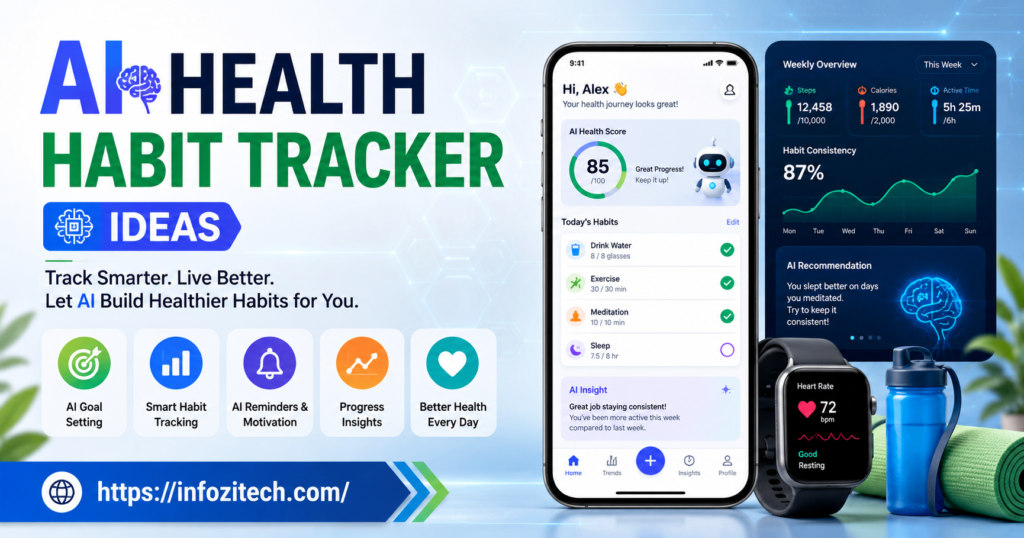
I had a sticky note on my fridge for about two years. “Drink water.” That was it, that was the whole plan. It fell off, I taped it back up, it fell off again, and at some point I just stopped noticing it was even there — which, if you think about it, is the whole problem with tracking habits by memory or motivation. You can’t out-willpower a system that isn’t paying attention to you.
So this is going to be a list of things that actually work, or at least things that worked for people I’ve talked to and for me. Not a hype piece about AI fixing your life. Some of these ideas are simple. A couple require setting something up. None of them require you to be a tech person.
Why This Actually Works Differently Than a Checklist
Quick detour before the list, because I think it matters. A paper tracker just records what happened. It doesn’t do anything with that information. An AI-based one — and I use that term loosely; sometimes it’s just a smart notification system — actually starts noticing things. Like, it’ll figure out you always skip your evening walk on Thursdays specifically, not “some days,” Thursdays, and it’ll ask if you want to move that habit to a different time instead of just nagging you at 6 pm every single day regardless of whether that’s ever worked.
That’s the difference. Less nagging, more noticing.
The Decision Fatigue Thing Nobody Talks About
By 8 pm I do not want to decide anything. Not what to eat, not whether to stretch, nothing. A decent tracker removes that by just telling you the next small thing based on your own patterns. It’s not motivating exactly. It’s more like having training wheels for the parts of your day where your brain has already checked out.
It Connects Stuff You Wouldn’t Connect Yourself
I didn’t know my sleep and my afternoon snacking were related until an app pointed it out to me over about three weeks of data. Sounds obvious in hindsight. It wasn’t obvious to me at the time, and I don’t think it would have been obvious to most people without seeing it laid out.
The Ideas — In No Particular Order, Honestly
Okay, here’s the actual list. I’m not ranking these because ranking implies one is universally better, and that’s not how habits work — what fixes your life might do nothing for mine.
1. Hydration reminders that account for how hot it is and how much you moved. Not just “drink water every two hours” on a loop. If it’s 95 degrees and you went for a run, the reminder should come sooner. Most basic trackers still don’t do this, and it drives me a little crazy.
2. Sleep tracking that flags the actual behavior, not just the hours. Late dinner, screen at midnight, whatever it is — a good system points at the cause instead of just showing you a graph of hours slept that you already knew was bad.
3. Mood and energy logging, cross-referenced. A thirty-second check-in twice a day. Over time it’ll show you things like “your energy tanks two days after a bad night’s sleep, not the next day, two days later.” That lag is real, and I never would have caught it myself.
4. Medication timing that adjusts. If you’re juggling more than one prescription or supplement, timing conflicts happen more than people admit. Some tools now flag overlaps and shift reminders around if you log a side effect.
5. Step goals that flex instead of staying fixed at some arbitrary number. Fixed step counts don’t care that you’re recovering from a cold or traveling or just had a genuinely rough week. Adaptive ones do, or they’re supposed to.
6. Craving pattern tracking — not calories, patterns. When do the cravings actually hit? What happened right before? Skipped lunch, bad sleep, a stressful call — usually there’s a thread, and it’s rarely “you’re just hungry.”
7. Screen break timing tied to your actual calendar. Not the rigid 20-20-20 rule everyone quotes, and nobody follows. If you’ve been in back-to-back meetings for two hours, that’s when the break nudge should hit, not on some fixed clock.
8. Stress detection through typing or voice patterns. This one sounds a little sci-fi, and I was skeptical too, but some tools pick up on typing speed changes before you’d consciously notice you’re stressed. With permission, obviously — worth checking the privacy settings before you turn this on.
9. Habit stacking suggestions. Pairing something new with something you already do reliably. Coffee brewing, then stretch. The AI part is just figuring out which of your existing habits are actually consistent enough to stack onto — turns out it’s usually fewer than you’d guess.
10. Cycle-aware scheduling for anyone tracking their cycle. Workout intensity, sleep expectations, even food suggestions shifted based on where you are in the month instead of the same generic advice every single day.
11. Accountability nudges that don’t guilt-trip you. This matters more than it sounds. “You tend to skip Tuesdays, want to lower the goal for that day specifically?” lands completely differently than a broken streak icon staring at you. One keeps people going. The other makes people quit and delete the app.
12. Overtraining and injury-risk flags for people who work out a lot. Cross-referencing intensity, sleep, and how sore you’ve reported feeling — catching the risk before the injury instead of after, which is obviously the whole point.
13. Scaled-down versions of your routine on bad days. If your data shows a rough night or high stress, the AI drops your thirty-minute routine to a five-minute version instead of either pushing the full thing or letting you skip entirely. Something over nothing.
14. Mapping your environment against your success rate. Some tools will notice, for example, that you’re way more likely to skip a workout on days you’re in the office versus working from home. Once you see that pattern in writing, it’s almost impossible to ignore, which is kind of the point.
15. Voice check-ins for people who hate typing into an app. “How’d today go?” spoken out loud, turned into structured data behind the scenes. Small thing, but typing friction is genuinely why a lot of people quit tracking within the first week.
Picking One Without Losing Your Mind Over It
There are a lot of these apps now. A lot. Here’s roughly how I’d narrow it down, for what it’s worth.
Pick the Habit First, Then Go Find the App
Backwards from how most people do it. Everyone downloads the popular app first and figures out what to log later. Don’t do that. Decide the one or two things that actually matter to you right now and find something built around tracking those.
Watch What Happens When You Mess Up
This is the real test. Miss a day and see what the app does. Does it show you some broken streak graphic that makes you want to throw your phone, or does it just quietly recalibrate and move on? The second kind keeps people using it for months. The first kind gets deleted in a week, in my experience anyway.
Privacy Is Worth Five Minutes of Your Time
Health data is nothing. Before you commit, check where it’s stored, whether it gets shared with anyone else, and whether you can actually delete it if you want to later. Most people skip this step. I’d rather you didn’t.
Making It Actually Stick, Long Term
A smart tool helps. It doesn’t do the whole job for you, and anyone telling you otherwise is selling something. A few things that seemed to matter, at least for me:
Keep it to under five habits at the start. More than that and the data turns into noise instead of insight. Check your weekly summary on the same day each week instead of obsessively refreshing it — I made that mistake early on, and it just made me anxious. Let the AI adjust things instead of overriding every single suggestion it makes, because if you’re going to override everything, what’s even the point of the tool? And give it three weeks minimum before deciding whether it’s working. The first week or so of data is basically noise.
Where This Leaves You
None of this is about perfect streaks or flawless data. It’s about a system that notices things you’d miss on your own and adjusts when your week goes sideways, because your week will go sideways; that’s just how weeks work. Start small — hydration reminders that actually think about the weather, or a sleep tracker that points at the real cause instead of just showing you a number. The shift from tracking by memory to tracking with something that actually learns from you is usually the difference between a habit that lasts a week and one that’s still going a year from now.




2 thoughts on “AI Health Habit Tracker Ideas: 15 Ways to Actually Stick With Better Habits”