
Rainy Season Travel Safety Checklist: What to Actually Prepare For
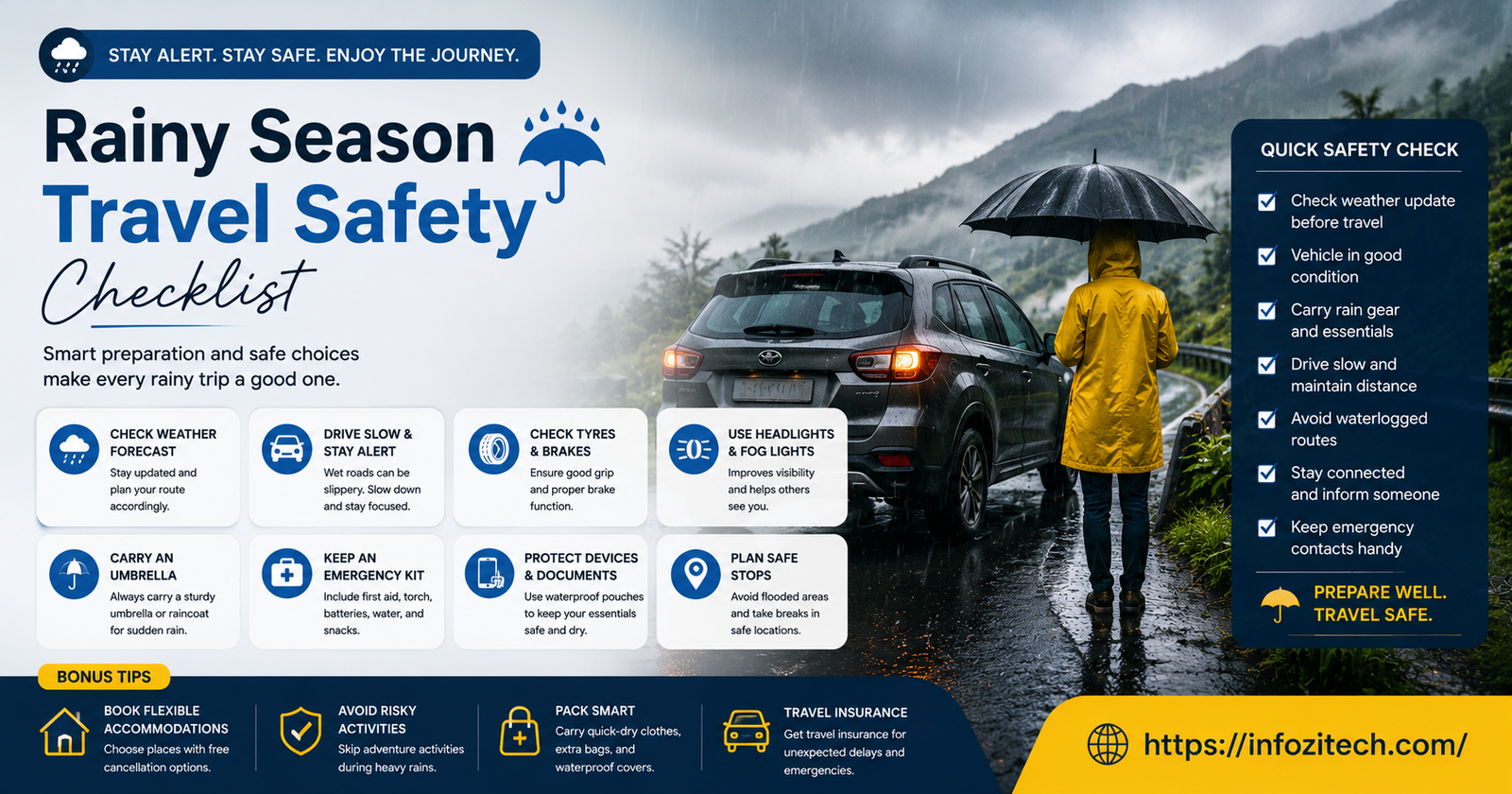
Got caught in a flash flood once. Road trip. Nothing about that morning suggested it would turn into a problem — clear sky, everyone in a good mood, snacks in the back seat, the whole thing. Then two hours in the road just weren’t there anymore. Water moving across it, fast, and not the kind of fast you can eyeball and decide “eh, probably fine.” We sat in the car for something like forty minutes arguing about whether to turn around or wait. Waited. Turned out to be the right call, though I didn’t know that at the time; I mostly just remember being annoyed and a little scared and hungry, in that order. That’s the whole reason this checklist lives in my head now. Rain by itself doesn’t wreck a trip. Not being ready for it does. That’s really the entire premise here.
Okay. What actually matters when you’re traveling in rainy season — not the “pack an umbrella” advice that shows up on every travel site, the stuff that would’ve actually helped that day.
Why Rainy Season Travel Needs Its Own Checklist
Most people pack for rain like it’s mildly annoying. A jacket. Maybe a plastic bag for the phone if they’re being thorough. Fine for a walk to a café in a drizzle. Not fine — not even close — for the kind of rain that washes out a road, floods a low bridge, turns a two-hour drive into something that eats your whole afternoon because half the route is underwater and nobody told you.
Rain doesn’t just make things wet; it changes what’s actually risky about a trip. Roads get slick, visibility goes to nothing. Rivers rise way faster than people expect — a river can look totally calm and be six inches higher an hour from now, and you won’t notice until you’re already in it, which is sort of the problem. Flights get cancelled with basically zero warning. None of this is an argument against traveling in rainy season, to be clear. Just travel differently. That’s it. That’s the whole point of this list.
Step 1: Check the Right Kind of Forecast
Don’t Just Check “Will It Rain”
A weather app saying 60% chance of rain tells you almost nothing useful, honestly. What you actually want is regional flood advisories, river gauge data if there’s a waterway anywhere near your route, and government weather alerts for wherever you’re headed. Most places have an official channel for this. It’s usually more accurate than whatever app happens to be on your phone, and people skip it constantly because checking one app feels like enough.
Watch the Days Before, Not Just the Day Of
Here’s the thing nobody thinks about — heavy rain three days before you get somewhere can still be flooding a river the day you arrive, even if your forecast that morning looks clear and sunny. Water from upstream takes time to travel down. Check the whole week leading up, not just the day itself. This one thing, right here, would’ve saved us a lot of the panic on that trip I keep bringing up.
Step 2: Plan Routes With Rain in Mind
Avoid Low-Lying Roads and River Crossings
Some roads flood every single year, like clockwork, and the people who live there know exactly which ones. Ask. Or dig up recent trip reports online before you drive somewhere you don’t know. If a road has a reputation, believe the reputation — don’t assume today’s different just because the sky looks okay when you’re pulling out of the driveway.
Build In Extra Time, On Purpose
Everything takes longer in rainy season. Slower driving, detours you didn’t plan for, sitting on the shoulder waiting out a downpour — it adds up fast. Add at least 30 percent onto however long you think the trip will take. And honestly, rushing is where most of the actual danger comes from. Not the rain itself. The rushing.
Have a Backup Route, Not Just a Backup Plan
“We’ll figure it out if the road’s closed” — that’s not a plan, that’s hoping. Look up an actual alternate route before leaving. Even a rough one scribbled down somewhere counts. You do not want to be figuring this out for the first time while sitting in traffic with water already creeping up the shoulder next to you.
Step 3: Pack for Function, Not Just Comfort
The Non-Negotiables
Real rain jacket. Not the fashion kind that looks the part and gives up after twenty minutes — one that actually blocks water. Waterproof bags for electronics and documents; dry sacks work great. A headlamp, because storms take out power more often than people plan for and you don’t want your phone doubling as flashlight and only-way-to-call-for-help at the same time. Extra socks — sounds small, isn’t small; wet feet for two days straight is a special kind of miserable that’s hard to explain until you’re living it.
What People Forget
A phone charger, fully charged, kept somewhere dry — that one’s obvious, but people forget it constantly. Digital and paper copies of documents, passport, ID, insurance, tucked into a waterproof pouch. Cash. Card readers and ATMs go down in storms, and you don’t want your whole trip riding on a network connection that the storm might just take out.
What You Probably Don’t Need
Full rubber boots, every single trip — overkill unless you actually know you’ll be wading through standing water. A giant golf umbrella, useless the second there’s any wind at all, and rainy season usually comes with wind. Skip both. A solid jacket and a compact umbrella cover it, save the bag space.
Step 4: Vehicle Prep If You’re Driving
Tires and Brakes Matter More Than People Think
Bald tires on a wet road are a genuinely different danger than bald tires on dry pavement. Stopping distance changes. Grip changes. Check tread before you leave. Check brakes too, especially if it’s been a while since anyone looked at them. Five minutes, basically no effort, matters more than almost anything else on this whole list.
Know What Your Car Can Handle
Not every vehicle handles a water crossing the same, and it’s not really about how big or tough-looking the car is. Know the wading depth — it’s in the manual, usually, and it’s almost always lower than people guess. Don’t know it? Then any water crossing is just a no. Simple as that.
Keep an Emergency Kit in the Car
Flashlight, basic first aid, something to signal with, extra water, a blanket. Doesn’t need to be fancy. Needs to exist, period. If you’re stuck somewhere waiting out a storm, this is the difference between an uncomfortable wait and a genuinely bad one.
Step 5: Know the Actual Danger Signs
Never Drive Through Moving Water
This matters more than every other line on this list combined; honestly, if you only remember one thing, make it this. Six inches of moving water can knock a grown adult off their feet. Twelve inches, and it can carry off most cars. Doesn’t have to look dramatic to be dangerous — water moving across a road that looks calm is still moving, and you have no real way to know how deep it is or what the road underneath even looks like anymore.
Watch for Sudden Water Rises
Near a river, a stream, or some low spot, and the water starts climbing noticeably fast — that’s the signal to get to higher ground right then. Don’t wait and see what happens. Flash floods move faster than most people’s instincts account for, and by the time it looks bad enough to worry about, it’s frequently already too late.
Trust Local Warnings Over Your Own Read of the Situation
People who’ve lived through a dozen rainy seasons somewhere know things a visitor just doesn’t, can’t, no matter how careful you’re being. If a local says a road’s unsafe, or a beach shuts down during storms for a reason — believe it, even when it looks totally fine standing there in that moment. Not the time for “how bad could it really be.”
Step 6: What to Do If You Get Stuck
Staying Put Is Often the Right Call
Sitting through a delay is frustrating, sure, nobody’s arguing that. But pushing through a storm to save two hours is how trips actually go wrong, over and over. If a road’s flooded or the storm’s bad, wait somewhere safe instead of trying to beat it. Lesson from my own flash flood story, again — those forty minutes felt endless at the time. Would’ve been nothing compared to what could’ve happened if we’d just tried to push through.
Keep Someone Updated on Your Location
Tell someone your route, your rough timeline, before you go, and check back in when plans change. Feels excessive right up until it’s the exact thing that gets help to you faster.
Know Where the Nearest Real Shelter Is
Not just any building — higher ground, sturdy, reachable without having to cross water to get there. Figure this out before you need it. Not while you’re already standing in the middle of a storm trying to Google it with one bar of signal.
Common Rainy Season Travel Mistakes
Same handful, over and over, every time. Trusting a single day’s forecast and ignoring what happened upstream days earlier. Driving through water because the car ahead made it across fine. Packing a jacket and completely forgetting dry storage for documents, then watching a bag get soaked through the first bad downpour. Skipping the tire check because the trip felt too short to bother — it never is too short to bother, for the record. Pushing through a flooded route to save twenty minutes instead of just waiting it out or rerouting. Every one of these shows up, again and again, in the stories people tell afterward about the trip that went sideways.
Final Thoughts
Rainy season travel isn’t something to avoid, not really, not for me anyway. Some of my best trips have happened right in the middle of it — quieter roads, everything greener, none of the crowds at spots everyone else skips because of the weather. But it asks a little more of you going in. Check the actual forecast, the real one, not just the little icon on your phone. Plan routes that account for water. Pack the boring stuff — dry bags, a charger, extra socks — over whatever looks good in the photos later. And if you ever find yourself sitting at the edge of water that wasn’t there an hour ago, wondering whether to just push through it: don’t. Wait it out. The forty minutes feels a lot better than the alternative, trust me on that one.









2 thoughts on “Rainy Season Travel Safety Checklist: What to Actually Prepare For”