
One Bag Packing System for Weekend Trips: How to Pack Light Without Forgetting Anything
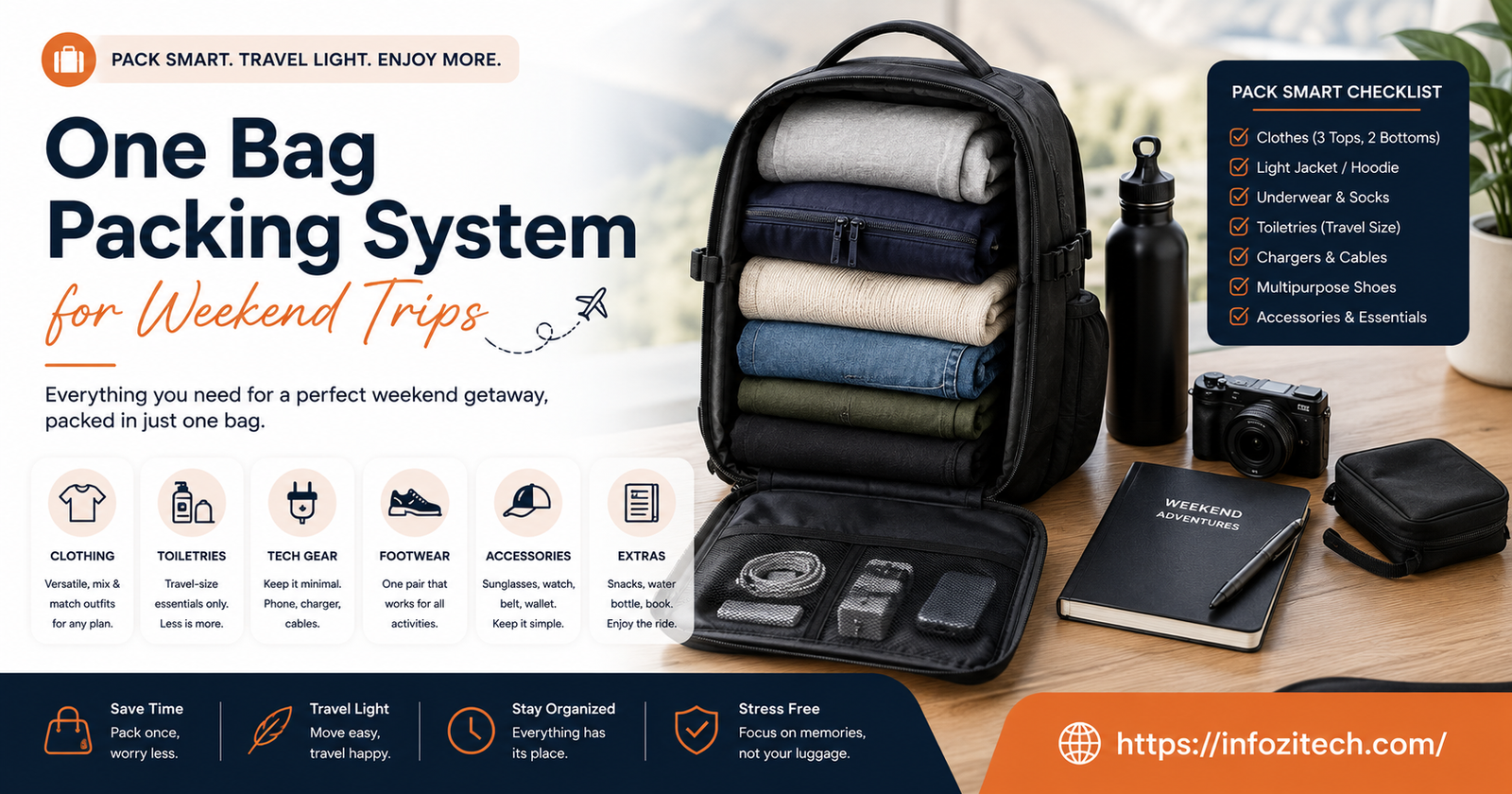
There’s a particular kind of stress that comes with a two-day trip. You’d think shorter would mean simpler, but somehow a weekend away can turn into the same overpacking spiral as a two-week vacation. A jacket “just in case.” A second pair of shoes you never wear. A charger for a device you’re not even bringing. By the time you’re done, you’ve got a rolling suitcase for a trip that should’ve fit in a backpack.
A one-bag system fixes that, and it’s not really about minimalism for its own sake. It’s about having a repeatable process, so you’re not reinventing your packing list every single Friday afternoon. Once the system is dialed in, packing for a weekend takes fifteen minutes instead of an hour of standing in front of your closet second-guessing yourself. This guide walks through how to actually build that system, piece by piece, so it works the same way every time.
Why One Bag Changes How You Travel
Carrying a single bag isn’t just lighter on your shoulders. It changes the entire shape of a trip. No waiting at baggage claim. No dragging a suitcase over cobblestones or up three flights of stairs at a walk-up rental. You move faster, you think less about your stuff, and you spend more of the actual weekend doing things instead of managing luggage.
There’s also a mental shift that happens once you commit to one bag. You start asking a different question when you pack. Not “should I bring this,” but “do I actually need this for two days?” That question alone cuts most of the clutter before it ever makes it into the bag.
The Real Difference Between One Bag and Everything Else
Most people don’t overpack because they need the extra stuff. They overpack because deciding what to leave out feels harder than just bringing it. A proper system removes that decision fatigue. Once you know your bag, your list, and your routine, you’re not negotiating with yourself at 11 pm the night before a trip. You just pack.
Choosing the Right Bag for Weekend Travel
Everything in this system depends on the bag itself. Pick the wrong one, and no amount of clever packing will fix it.
Size and Volume That Actually Fits a Weekend
Somewhere between 30 and 40 liters tends to be the sweet spot for a two- or three-day trip. Big enough for clothes, toiletries, and a bit of gear, small enough that it still qualifies as a personal item or carry-on on most airlines. Going bigger than that usually just invites you to pack more than you need, since the extra space has a way of filling itself.
Structure Over Style
A bag that holds its shape does a lot of the organizational work for you. Soft, floppy totes look fine empty but turn into a shapeless pile the moment you start loading them up. Look for a bag with some internal structure, a flat bottom, and ideally a way to keep it upright when it’s set down, so you’re not digging through a slouching bag on a train platform.
One Main Compartment Beats Ten Small Pockets
It’s tempting to buy a bag with pockets for everything, but too many small compartments actually slow you down. You end up patting yourself down trying to remember which pocket has your phone charger. One main compartment, a couple of dedicated spots for things you need fast like your passport or wallet, and that’s usually enough.
Building the Core Packing List
Once the bag is sorted, the next step is deciding what actually goes inside it. This is where most people either overthink it or wing it entirely. The middle ground is a short, repeatable list.
Clothing That Works Together
The trick isn’t packing fewer clothes exactly; it’s packing clothes that mix and match. Two or three tops that all pair with the same bottoms get you more outfit combinations than five outfits that only work as a set. Stick to a simple color palette so nothing you bring is stranded without something to pair it with.
Layering Instead of Guessing the Weather
Rather than trying to predict exactly what the weather will do, pack layers you can add or remove. A base layer, something mid-weight, and a light outer layer cover most weekend weather swings without needing a separate outfit for every possible forecast. Check the weather the night before you leave, not a week out, since forecasts shift constantly.
Toiletries in Travel Sizes You Reuse
Buying full-size toiletries and repacking a fraction of them into small travel bottles every single trip gets old fast. Keep a dedicated set of travel-size containers, refill them once, and leave them packed in your travel bag between trips so you’re not raiding your bathroom shelf every Friday.
Packing Cubes and Compression Tools
This is the part of the system that actually makes a one bag setup feel spacious instead of cramped.
Why Packing Cubes Are Worth It
A packing cube isn’t just a fancier ziplock bag. It compresses clothes into a firmer shape, which makes your bag easier to pack tightly without everything shifting around mid-trip. It also means you can pull one cube out at your destination and know exactly what’s inside it, instead of unpacking the entire bag onto a hotel bed.
Sorting by Category, Not by Day
Rather than packing one cube per day of the trip, sort by category instead. One cube for tops, one for bottoms, one for underwear and socks. This makes it far easier to mix and match once you’re actually there, since your outfit choices aren’t locked into a rigid day-by-day plan that falls apart the moment your plans change.
Compression Straps and Rolling Versus Folding
Rolling clothes tends to save more space than folding for casual items like t-shirts and athletic wear, while folding still works better for anything structured, like a button-up shirt you don’t want creased. If your packing cubes have compression zippers, use them, but don’t overstuff to the point where the fabric strains. That’s usually a sign you’re bringing more than the trip actually needs.
Tech and Everyday Carry Essentials
Weekend trips still need a handful of tech items, but this is one of the easiest categories to overpack.
The Charging Setup That Covers Everything
A single multi-port charger with the right cables for your phone, headphones, and any other device beats carrying three separate chargers. If you travel with a laptop or tablet, check whether it can share a charger with your phone before packing a second brick you don’t need.
A Dedicated Tech Pouch
Keep cables, a portable battery, and any adapters in one small pouch rather than loose in the bottom of your bag. Loose cables have a way of tangling into a knot the size of a fist by the time you reach your destination, and a dedicated pouch stops that before it starts.
What to Actually Leave at Home
Not every gadget needs to come along. A weekend trip rarely needs a second laptop, a full camera kit, or a backup phone. Ask whether you’ll genuinely use something in the next 48 hours. If the honest answer is “maybe,” it usually means no.
Creating a Repeatable Packing Checklist
The real power of a one bag system isn’t the bag or the gear; it’s turning the whole process into something you don’t have to think hard about.
Writing It Down Once
Build a checklist once, covering clothing, toiletries, tech, and documents, then reuse it for every trip instead of rebuilding it from memory each time. Keep it somewhere you’ll actually find it again, whether that’s a notes app or a printed card tucked into the bag itself.
Adjusting for Trip-Specific Needs
Your base checklist covers 90 percent of what you need. The remaining 10 percent is trip-specific: a swimsuit for a beach weekend, hiking boots for a trip into the mountains. Add a short “extras” section to your checklist for these instead of rebuilding the whole list around one trip’s exceptions.
Doing a Pre-Trip Bag Audit
A few minutes before you zip the bag shut, do a quick pass through your checklist. This catches the small stuff- chargers, a spare contact lens case, your ID, before you’re already at the airport realizing something’s missing.
Bringing It All Together
A one bag packing system isn’t about proving you can travel with less. It’s about removing the friction and decision fatigue that turns a simple weekend trip into a stressful packing session every single time. Start with a bag that actually fits your travel style, build a core list of clothes and gear that work together, and lean on packing cubes to keep things organized instead of crammed. Once the checklist exists, packing stops being a chore and becomes something closer to muscle memory.
The people who travel light consistently aren’t necessarily better packers than everyone else. They’ve just built a system once and stuck with it, so every weekend trip after that first one takes fifteen minutes instead of an hour of second-guessing what to bring.







2 thoughts on “One Bag Packing System for Weekend Trips: How to Pack Light Without Forgetting Anything”