
Weekend Walking Plan for Busy Professionals
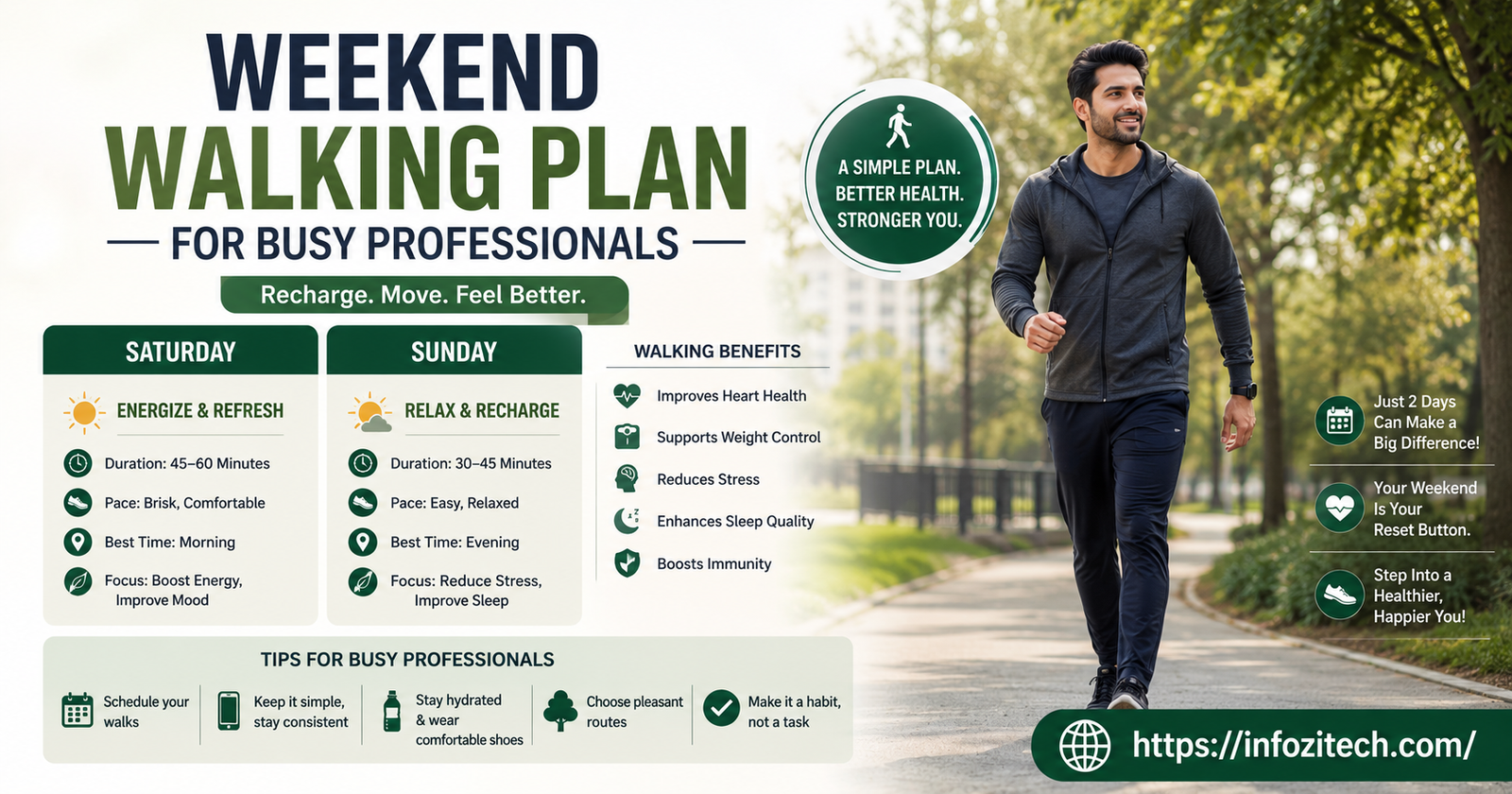
Weekdays are basically a write-off for most people with real jobs. Meetings stack on top of each other, you eat lunch at your desk if you eat at all, and by the time you’re done there’s maybe enough energy left to make dinner and stare at a screen for a bit before bed. So the weekend ends up carrying almost all the exercise weight, whether that’s fair or not, and walking’s usually the one thing that survives that squeeze because it doesn’t need a gym membership or a specific outfit or really any planning at all. I went through a stretch a couple years back where weekday walks just weren’t happening, full stop, and had to figure out how to get something worthwhile out of two days instead of seven. This is roughly what I landed on.
Nothing here assumes you’ve got hours free or some perfectly quiet Saturday morning with nothing else going on. It’s built around actual weekends, the kind with errands and family stuff and maybe a hangover from Friday night, and it still gets you real benefit out of it.
Why Walking Is the Right Call When Time’s Tight
There’s a reason walking keeps coming up as the default recommendation for people slammed during the week, and it’s not just because it’s easy, though that’s part of it.
Low Barrier Means It Actually Happens
A run needs the right shoes, maybe a route you’re comfortable with, some mental buy-in to actually go hard. Walking needs basically none of that. You can do it in whatever you’re wearing, start and stop whenever, and there’s no real threshold to cross before you’re “doing the exercise.” That lower barrier is the whole reason it survives busy weeks when other plans don’t.
Two Focused Days Can Cover More Ground Than You’d Think
People assume you need daily consistency for exercise to count for anything, but two solid walking sessions on a weekend, done with a bit of intention, add up to a meaningful chunk of weekly activity. Not ideal compared to spreading it across seven days, sure, but genuinely useful, and a lot better than nothing, which is the actual alternative for most busy professionals.
It Does Double Duty as Recovery Too
Weekend walks aren’t just exercise; they’re also some of the only unstructured thinking time a lot of people get all week. No meeting to prep for, nobody needing something from you, just moving and letting your brain wander a bit. That mental reset matters almost as much as the physical activity itself, arguably more for some people.
Saturday Morning: The Longer, Slower Walk
Saturday’s usually got a bit more flexibility than Sunday, so this is where the main walk of the week goes.
Aim for 30 to 45 Minutes, Not a Set Distance
Distance goals get people stuck comparing themselves to some ideal number instead of just walking. Time’s a better target — thirty to forty-five minutes, at whatever pace feels sustainable that particular morning. Some Saturdays that’s a brisk pace, some Saturdays it’s slow and easy because you’re tired, and both count.
Pick a Route With Something to Look At
A loop through your neighborhood works fine, but a route with a bit of variety, a park, some trees, a different street than usual, makes the walk feel less like a chore you’re grinding through. Doesn’t need to be scenic exactly, just not the same forty-five minutes of identical houses you already know by heart.
Bring Coffee, Bring a Podcast, Bring Whatever Makes It Enjoyable
This isn’t training for a marathon; there’s no reason to suffer through it. Coffee in hand, a podcast or music you actually like, maybe a friend if the timing works out. The more enjoyable it is, the more likely it happens again next Saturday without you having to talk yourself into it.
Saturday Afternoon: A Shorter Reset Walk If You Can Fit It
If the morning walk was the main event, an afternoon walk is more of a bonus, useful but not essential.
Ten to Fifteen Minutes After a Meal
A short walk after lunch or an early dinner helps with digestion and gives you a mental reset in the middle of whatever else the day’s got going on- errands, family time, whatever’s on the agenda. Doesn’t need to be a whole separate outing, just a loop around the block.
Use It as a Transition Between Parts of Your Day
If Saturday’s got a morning chunk and an evening chunk that feel disconnected, a short walk in between acts almost like a reset button, clearing your head before whatever’s next. Small thing, but it works better than people expect.
Sunday Morning: Keeping It Light Before the Week Creeps Back In
Sunday’s got its own energy, usually a little heavier with the coming week already sitting in the back of your mind, so the walk here serves a slightly different purpose.
A Shorter, Calmer Walk Than Saturday
Twenty minutes is plenty. This isn’t about pushing distance or pace; it’s about getting outside, getting some daylight, and easing into Sunday without immediately spiraling into thinking about Monday’s meetings.
Leave the Phone in Your Pocket, Mostly
Sunday morning walks are a good candidate for actually disconnecting a bit, no podcast even, just quiet, or at least mostly quiet. A lot of people find this the closest thing to meditation they actually manage all week, without ever calling it that.
Walk Somewhere That Feels Different From Saturday
If Saturday’s walk was the neighborhood loop, Sunday’s a good day to drive somewhere else, a nearby trail, a different park, even just a different part of town. The novelty helps it feel like its own thing rather than a repeat of yesterday.
Sunday Evening: An Optional Wind-Down Walk
Not everyone will want or need this one, but for some people it helps more than you’d guess.
A Short Walk to Settle the Sunday Scaries
If dread about the coming week tends to creep in Sunday evening, a short walk, even just ten minutes, can help settle that anxious, restless feeling better than sitting with it on the couch. Movement genuinely helps process that specific kind of low-grade dread in a way that scrolling a phone doesn’t.
Keep It Brief and Undemanding
This isn’t the walk to push pace or distance on. Ten minutes, slow, just enough to shift your headspace before winding down for bed and the week ahead.
Making the Plan Realistic for an Actual Weekend
A plan that assumes a perfectly free weekend isn’t realistic for most people, so here’s how to adjust it around real life.
If You Only Get One Walk In, Make It Saturday’s
If the weekend gets eaten by family obligations, errands, whatever, and you can only manage one walk, prioritize the longer Saturday morning one. It’s the anchor of the whole plan, and everything else is genuinely optional on top of that.
Combine Walking With Errands When You Can
Walking to a coffee shop instead of driving, parking further away than you need to at the grocery store, taking the long way back from wherever you’re already headed. These small additions stack up without needing a dedicated block of time carved out separately.
Bring Someone Along When Possible
A weekend walk with a partner, a friend, a kid, whoever, turns exercise into connection time too, which makes it a lot easier to prioritize over the dozen other things competing for your Saturday morning.
Adjusting the Plan Week to Week
Some weekends will have more room for this than others, and that’s fine, the plan should flex rather than becoming one more rigid obligation.
A Busy Weekend Still Gets Something
Even a fifteen-minute walk somewhere in a packed weekend beats skipping it entirely. Lower the bar rather than abandoning the plan altogether when things get tight.
A Free Weekend Can Stretch Further
If you’ve got an unusually open Saturday, there’s nothing wrong with extending the morning walk to an hour, or adding a proper hike if that’s available nearby. Let the plan expand when there’s room for it to.
Final Thoughts
A weekend walking plan for busy professionals doesn’t need to be complicated or rigid, it just needs to actually fit into the two days most people realistically have available. A longer walk Saturday morning, something shorter Sunday, filled in around whatever else the weekend’s already got happening. Do that consistently, even loosely, and it adds up to real activity over the course of a month, real mental space too, without needing to carve out time during the week that mostly just doesn’t exist for people with jobs like this.









1 thought on “Weekend Walking Plan for Busy Professionals”