
Implement Joint Mobility Routine Before Walking
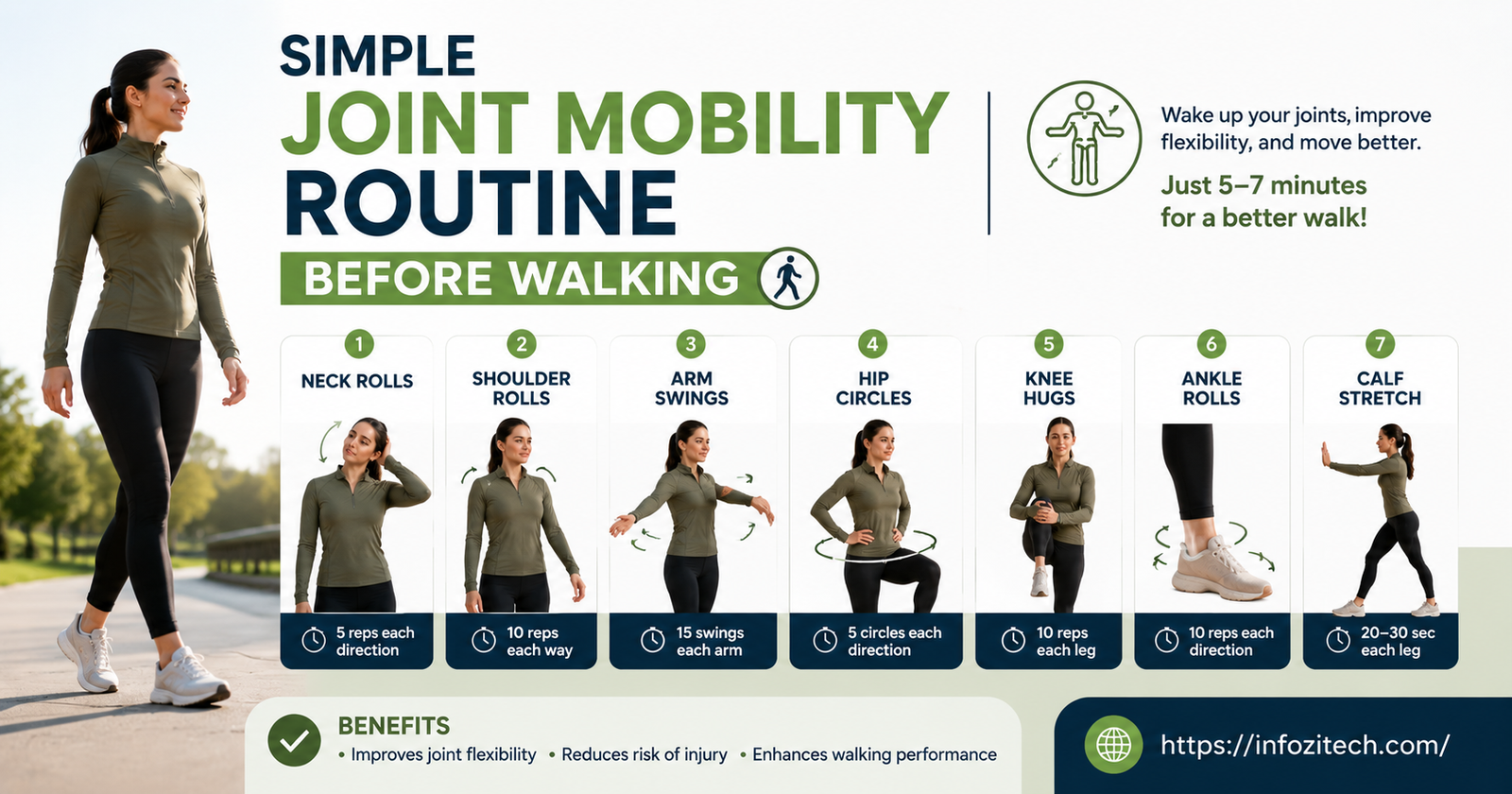
Most people either skip warming up before a walk entirely, figuring it’s just walking- how hard can it be- or they do some random static stretch they half-remember from a gym class years ago and call it done. Neither one actually does much. Walking feels simple because it is simple, but your joints don’t know the difference between a slow neighborhood stroll and something more demanding if they’re cold and stiff going into it. Ask me how I know — twisted my ankle stepping off a curb once, first five minutes into a walk, because I basically just… started walking. No warm-up. Nothing.
This routine takes maybe five minutes. No equipment, no gym, you can do it in your kitchen or your driveway before you head out. It’s built around the joints that actually take the load during walking — ankles, knees, hips, and honestly your spine and shoulders too, since your whole body moves when you walk, not just your legs. That’s a thing people forget.
Why Joints Need Warming Up Before a Walk, Even a Slow One
Walking looks passive. It’s really not from a joint’s perspective anyway. Every step is your ankle, knee, and hip absorbing impact and then generating force to push you forward again, over and over, hundreds of times in a twenty-minute walk. If those joints are stiff going in — which they usually are first thing in the morning, or after sitting at a desk all day — that repeated motion happens through a smaller range than it should, and things tighten up further instead of loosening.
Cold Joints Move Differently Than Warm Ones
There’s an actual mechanical reason for this. Your joints are cushioned by synovial fluid, which basically lubricates everything so cartilage isn’t grinding against cartilage. That fluid thickens up when you’ve been still for a while, kind of like oil in a cold engine. A few minutes of gentle movement warms it back up, thins it out, and lets your joints move through their full range instead of a restricted one. Skip that step and you’re walking on joints that are, in a very real sense, not ready yet.
Mobility Isn’t the Same Thing as Stretching
This trips people up constantly. Stretching is usually static — hold a position, feel a pull, stay there for thirty seconds. Mobility is dynamic — you’re moving the joint through its range repeatedly, which is actually closer to what walking itself demands. Static stretching cold, before you’ve moved at all, can even reduce power output temporarily. Mobility work doesn’t have that downside, and it does a better job prepping you for something like walking anyway.
Starting From the Top: Neck and Shoulders
Feels like an odd place to start for a walking routine, but your upper body actually swings and rotates the whole time you walk, so it’s worth including.
Neck Rolls
Slow circles, five each direction. Nothing dramatic, no forcing it — if your neck’s stiff from sleeping wrong or hunching over a phone, this is where you’ll notice it first. Keep it gentle.
Shoulder Rolls
Ten rolling forward, ten rolling back. Shoulders carry more tension than people realize, especially if you sit at a desk most of the day, and loose shoulders actually help your arm swing move naturally while you walk instead of feeling stiff and mechanical.
Arm Circles
Small circles building up to bigger ones, ten each direction. This wakes up the whole shoulder joint and a bit of the upper back too, which matters more for walking than most people assume — your arms aren’t just along for the ride.
Moving Into the Middle: Spine and Hips
This is really the core of the routine, since your hips do most of the actual work of walking and your spine needs to rotate slightly with every stride whether you notice it or not.
Standing Side Bends
Reach one arm overhead and lean gently to the opposite side, five reps each way. This opens up the sides of your torso and the muscles running along your spine, which tend to get tight from sitting and just don’t get much attention otherwise.
Hip Circles
Hands on your hips, rotate your hips in a circle like you’re using a hula hoop, five each direction. Sounds silly. Works well anyway — this loosens the hip joint capsule itself, not just the muscles around it, which matters because your hips are absorbing a lot of the actual impact and drive during a walk.
Standing Knee-to-Chest
Lift one knee toward your chest, hold for a second or two, lower it back down, five reps each leg. Balance on the standing leg if you can — a chair or wall nearby is fine if you need something to hold onto. This one specifically preps the hip flexor, which shortens up fast from sitting and needs to lengthen back out before you ask it to swing your leg forward repeatedly.
A Few Gentle Hip Flexor Stretches, If You’re Tight
If you sit a lot during the day, your hip flexors are probably tighter than you’d guess. A short standing lunge-style stretch, just a few seconds each side, nothing deep, can help before you walk. Skip this one if anything feels sharp or off, though — mild tightness is normal, real pain isn’t, and this routine’s about waking joints up, not pushing through something that hurts.
Finishing at the Bottom: Ankles and Knees
Ankles and knees take the most direct impact of anything in your body during a walk, so this part matters more than people usually give it credit for.
Ankle Circles
Lift one foot slightly off the ground, rotate your ankle in circles, ten each direction, then switch feet. Ankles are involved in basically everything about how you push off and land with each step, and they’re also one of the joints most likely to feel stiff first thing in the morning.
Bodyweight Squats
Eight to ten slow, controlled reps. Not deep squats, not anything intense — just enough range to wake up your knees and hips together, since they need to work as a unit while you’re walking anyway.
Heel-to-Toe Rocks
Standing still, rock your weight from your heels to your toes and back, ten reps. This one’s small but it directly mimics the rolling motion your foot goes through with every single step, heel strike to toe-off, so it’s basically a rehearsal for the exact movement you’re about to do for the next twenty or thirty minutes.
Putting the Whole Routine Together
Here’s the order that makes sense, top to bottom, roughly five minutes total if you’re not rushing:
Neck rolls, shoulder rolls, arm circles. Side bends, hip circles, knee-to-chest. Ankle circles, bodyweight squats, heel-to-toe rocks. That’s it. No equipment needed, and you genuinely can do the whole thing in a kitchen, a driveway, wherever you’re about to head out the door from.
Adjust It to How You’re Feeling That Day
Some mornings your hips are the stiff part. Other days it’s your ankles, or your neck’s bothering you from how you slept. Spend a little extra time wherever you’re feeling it that day rather than rushing through every move evenly just to check a box. The routine’s meant to bend around you, not the other way around.
Skip Anything That Feels Sharp, Not Just Stiff
Stiffness is normal and honestly kind of the point of doing this. Sharp pain isn’t, and if something feels off rather than just tight, that’s worth paying attention to instead of pushing through it because “it’s just a warm-up.”
Final Thoughts
A joint mobility routine before walking doesn’t need to be complicated or take twenty minutes out of your morning. Five minutes, no equipment, moving through the joints that actually carry you through a walk — ankles, knees, hips, spine, even your shoulders and neck — sets you up to walk without that stiff, creaky first ten minutes a lot of people just assume is normal. It isn’t, really. It’s just what happens when joints go straight from sitting or sleeping into repetitive motion with no transition in between. Give them the transition, and the whole walk feels different from the first step.









3 thoughts on “Implement Joint Mobility Routine Before Walking”