
How to Recover After a Long Day of Standing
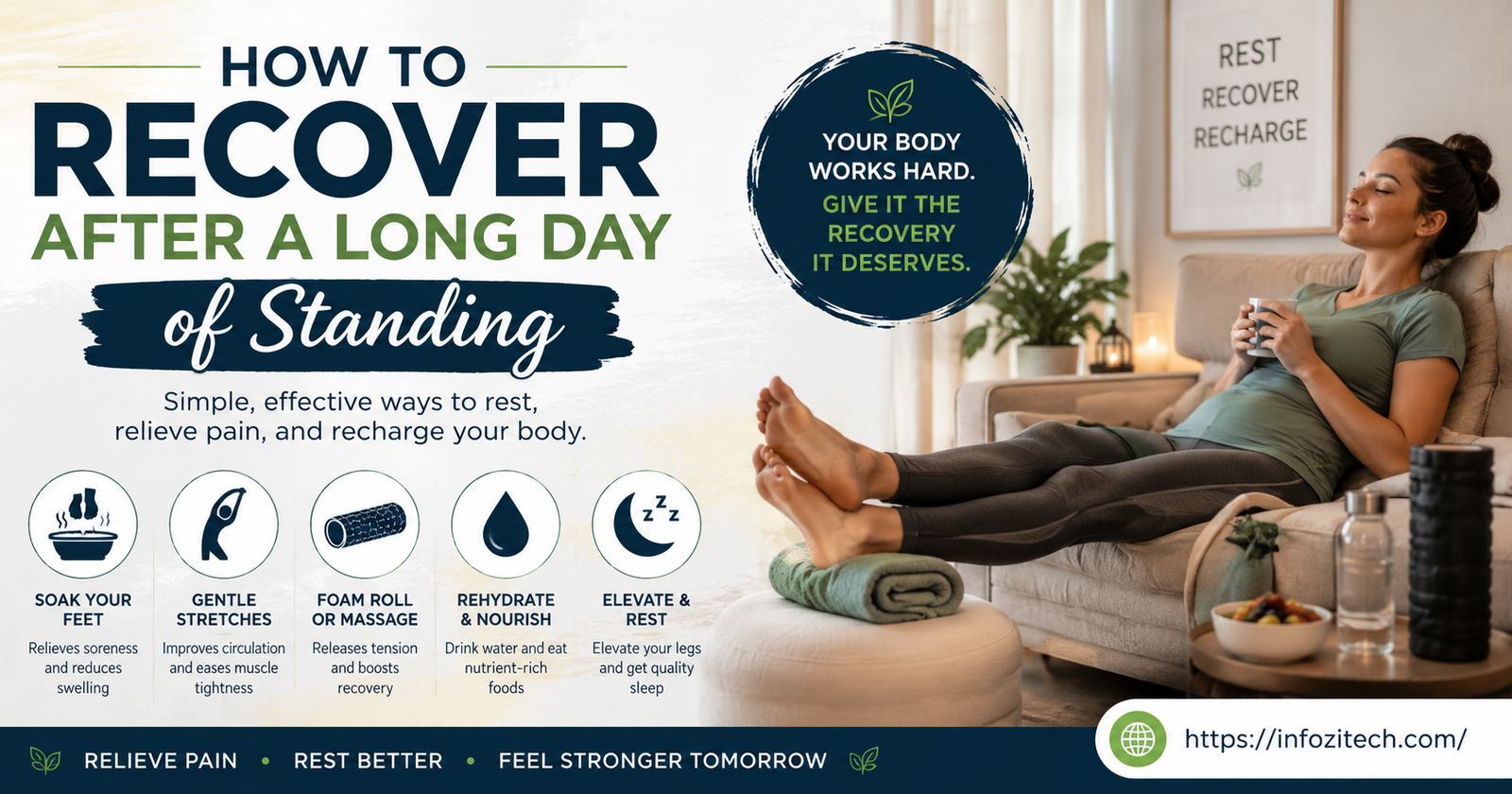
I worked a front desk job years ago where I’d get home and just lie on the kitchen floor for a minute before doing anything else. Not dramatic, not a fainting spell, just — floor felt better than standing one more second. If that sounds familiar, you already know the specific kind of tired this is. Arches throbbing. Calves gone stiff, almost wooden. And somehow your lower back decided to join in too, even though you were just standing there. Nurses know this. Teachers, retail folks, line cooks, hair stylists, warehouse workers. Basically anyone whose job keeps them upright for most of a shift ends up paying a toll that people who sit at desks all day just don’t get, and honestly can’t really imagine until they’ve done it themselves.
Here’s the thing though. Fixing it doesn’t require some elaborate routine or a drawer full of supplements you’ll use twice. It’s a handful of small things, done in the right order, that actually deal with what’s happening in your legs and back and nervous system after hours upright. That’s really it.
So this is going to walk through what’s actually happening in your body during a long shift, then what to do about it once you’re home — roughly in the order you’d want to do it, starting the second you walk through the door.
Why Standing All Day Wears You Out More Than You’d Expect
Feels backwards, right? Standing still should be easier than walking around all day. Except it isn’t, and there’s a reason. When you’re walking, your leg muscles keep contracting and relaxing over and over, which acts almost like a second pump, pushing blood back up toward your heart. Stand in one spot for hours, and that pump basically shuts off. Blood pools down in your lower legs. That’s the actual mechanical reason your feet and ankles look puffier by 6 pm than they did at 9 am.
Meanwhile there’s a whole separate thing happening with your stabilizer muscles — the small ones in your feet, calves, lower back — which are working nonstop just to keep you upright and balanced. These aren’t the big power muscles you use to sprint or lift something heavy. They’re built for slow, steady endurance, and they wear down gradually. You don’t notice it happening in the moment. You notice it around hour six.
Throw in concrete floors, shoes that don’t actually support your arch, maybe you forgot to drink water because the shift was slammed — and yeah. No wonder you feel like you ran a 5k when you never left a ten-foot radius.
Three Things Take the Hit
Standing all day stresses three systems, and honestly this is the part people miss. They think “my feet hurt” and stop there.
Circulation is one — blood and fluid pool low, causing that swollen, heavy feeling. Muscles and joints are another — calves, feet, knees, hips, lower back, all of it tightens up from sustained low-grade tension that never really lets up. And then there’s plain nervous system fatigue, which is harder to name but real — that generally wiped-out, everything-feels-sensitive state by the end of a long shift.
Which is why just sitting down for twenty minutes doesn’t fully fix it. You’ve got to hit circulation, muscle tension, and overall fatigue — not just one of them.
Immediate Relief: What to Do the Moment You Get Home
Whatever you do in the first twenty or thirty minutes after clocking out matters more than most of what comes after. Not because it’s magic, just because it’s your best shot at interrupting the fatigue cycle before it fully sets into your muscles overnight. Miss this window, and you’re kind of playing catch-up for the rest of the evening.
Get Your Legs Up. Before Anything Else.
Don’t check your phone first. Don’t start dinner. Lie down, prop your legs against a wall or stack a couple pillows under them so they’re above your heart, and just stay there. Ten minutes, maybe fifteen. Gravity does the actual work here, pulling that pooled fluid back out of your lower legs and feet. You’ll feel the difference — legs go from heavy and tight to something closer to normal.
Shoes Off. Socks Off. Let Your Feet Actually Breathe
Your feet have been cooking in there all day, trapped in heat and sweat, swelling up the whole time. Getting shoes and socks off the moment you’re home lets them cool down and shrink back to something like their normal shape. Sounds trivial. It’s not — everything you do after this works better once your feet aren’t still stewing.
Try a Cold-to-Warm Foot Soak
This one actually surprised me the first time I tried it. Soak your feet in cool water for a couple minutes, then switch to warm for a couple more, back and forth two or three times. The temperature swing makes your blood vessels constrict and then open back up, which pushes out a lot of the fluid buildup causing that soreness and swelling in the first place. Sounds fussy but it takes ten minutes and you can do it while scrolling your phone or half-watching TV.
Muscle Recovery: Loosening What the Day Tightened
Once the swelling’s calmed down some, the next thing to deal with is the actual muscle tension — calves, feet, lower back, all of it wound tight from hours of holding you upright.
Stretch Out Your Calves and Achilles
Here’s something a lot of people don’t realize: standing all day gradually shortens your calf muscles. Over weeks and months that tightness can actually feed into things like plantar fasciitis, which is its own miserable rabbit hole nobody wants to go down. The fix is simple though — a basic wall stretch, one leg back, heel pressed flat into the floor, held for about thirty seconds, then switch legs. Do it a couple times if you’re really stiff.
Roll Out the Bottoms of Your Feet
Grab a tennis ball. Or a frozen water bottle if you’ve got one in the freezer. Roll it under your arch for a few minutes per foot. This breaks up tension in the plantar fascia — that thick band running along the bottom of your foot — and it’s especially good if you get that sharp, almost bruised feeling near your heel toward the end of a shift.
Loosen Up the Lower Back and Hips
People forget the lower back and hip flexors are under constant strain too, especially if you lean on one leg or shift your weight a lot during the day, which most of us do without even noticing. A relaxed child’s pose, held for a minute or so, paired with a hip flexor lunge stretch on each side, unwinds a surprising amount of that tightness. Doesn’t take long. Just don’t skip it because it feels like the “optional” stretch — it isn’t.
Compression, Massage, and the Handful of Tools Worth Owning
There’s a ton of junk marketed at tired feet. Most of it’s a waste of money. A few things, though, actually hold up.
Compression Socks — Not Just an Athlete Thing
Graduated compression socks squeeze tighter at the ankle and looser as they go up the leg, which helps blood actually move back up toward your heart instead of just sitting there. Wear them during your shift if you can, or even just for an hour or two after you’re home. The difference in that heavy, swollen feeling is bigger than you’d expect from a sock.
Just Use Your Hands, Honestly
You don’t need a $200 massage gun. Press your thumbs firmly along the arch of your foot, heel to toes, three or four minutes each side. That’s basically it, and it loosens tight fascia and gets blood moving better than most gadgets. For calves and thighs, a cheap foam roller does the job fine.
Epsom Salt Baths, Because Sometimes the Old Remedy Is Just Right
Warm water with Epsom salt, whether it’s just your feet or a full soak, has stuck around this long for a reason. The warmth relaxes muscles and improves blood flow on its own, salt or no salt, but a lot of people also find the whole ritual of it — sitting still, water, quiet — helps them mentally come down from a hard day, which honestly matters just as much as the physical part.
Nutrition and Hydration — The Part Everyone Skips
You can do every stretch and soak in this article and still feel wrecked the next day if your body doesn’t have the raw materials to actually repair itself.
Water. Before the Snack, Before Dinner, Before Anything.
If you’ve been standing all day in a warm kitchen or under retail lighting, you’ve lost more fluid than you think — way more than people assume. Dehydration makes swelling worse and slows muscle recovery down, full stop. So the big glass of water needs to happen before you reach for food, not after.
Electrolytes and Protein Matter More Than People Think
Even without running or lifting, a full day of standing depletes electrolytes — potassium, magnesium, the stuff your muscles need to function properly and not cramp up on you at 2am. Pair a decent protein source with something like a banana, some leafy greens, or a handful of nuts, and you’re covering both muscle repair and setting yourself up for better sleep.
Anti-Inflammatory Foods, for the Long Game
If standing shifts are just a regular part of your week — not a one-off — then working things like fatty fish, berries, turmeric, and olive oil into your normal diet lowers your baseline soreness over time. Not overnight. But weeks in, it adds up.
Sleep Matters Too, Not Just What You Do Before Bed
Recovery doesn’t just stop once you’ve stretched and soaked and eaten something decent. What happens overnight is a whole other piece of it.
Keep Your Legs a Little Elevated While You Sleep
If swelling tends to hang around into the next morning, tuck a pillow under your calves before you go to sleep. Keeps your legs slightly raised for hours, which means fluid keeps draining even while you’re unconscious and doing nothing else about it.
Put the Phone Down Earlier Than You Think You Need To
Physical exhaustion and a brain that’s still wired from scrolling don’t mix well — you end up tired but somehow still wide awake. Thirty minutes without a screen before you actually try to sleep gives your nervous system room to downshift properly, and that’s when the deep, actually-restorative sleep happens. Skip this and you’ll wake up almost as sore as when you went to bed.
Making Tomorrow a Little Easier on Yourself
Recovery is one half of this. The other half is just not beating yourself up as badly in the first place.
Get Shoes That Actually Support Your Feet
This is the boring advice nobody wants to hear, but real arch support and real cushioning change an eight-hour shift more than almost anything else on this list. And if you can swing it, rotate between two pairs — they compress and wear differently, so your feet get slightly different support day to day instead of the exact same pressure points every single time.
An Anti-Fatigue Mat, If You’re Stuck in One Spot
If your job has you basically glued behind a counter or a single workstation all day, an anti-fatigue mat is worth every dollar. The slight give underfoot keeps your muscles making small adjustments instead of locking into one static, tension-holding position for eight hours straight.
Sixty-Second Breaks Add Up More Than You’d Think
Shift your weight. Do a few calf raises when nobody’s looking. Step away for a minute if you can. None of it feels like much in the moment, but by the end of a ten-hour shift, those tiny breaks are the difference between “tired” and “wrecked.”
Final Thoughts
There isn’t one miracle fix for a body that’s spent all day standing. It’s a handful of small things stacked together — legs up, stretching out what’s tight, actually drinking water and eating something with electrolytes in it, getting real sleep — so your body has an actual chance to repair itself before you’re back on your feet the next morning. None of it’s complicated. Do it consistently, though, and the soreness and swelling drop off noticeably, and you get some of that leftover energy back for your actual life outside of work.








1 thought on “How to Recover After a Long Day of Standing”