
Morning Mobility Routine for Remote Workers
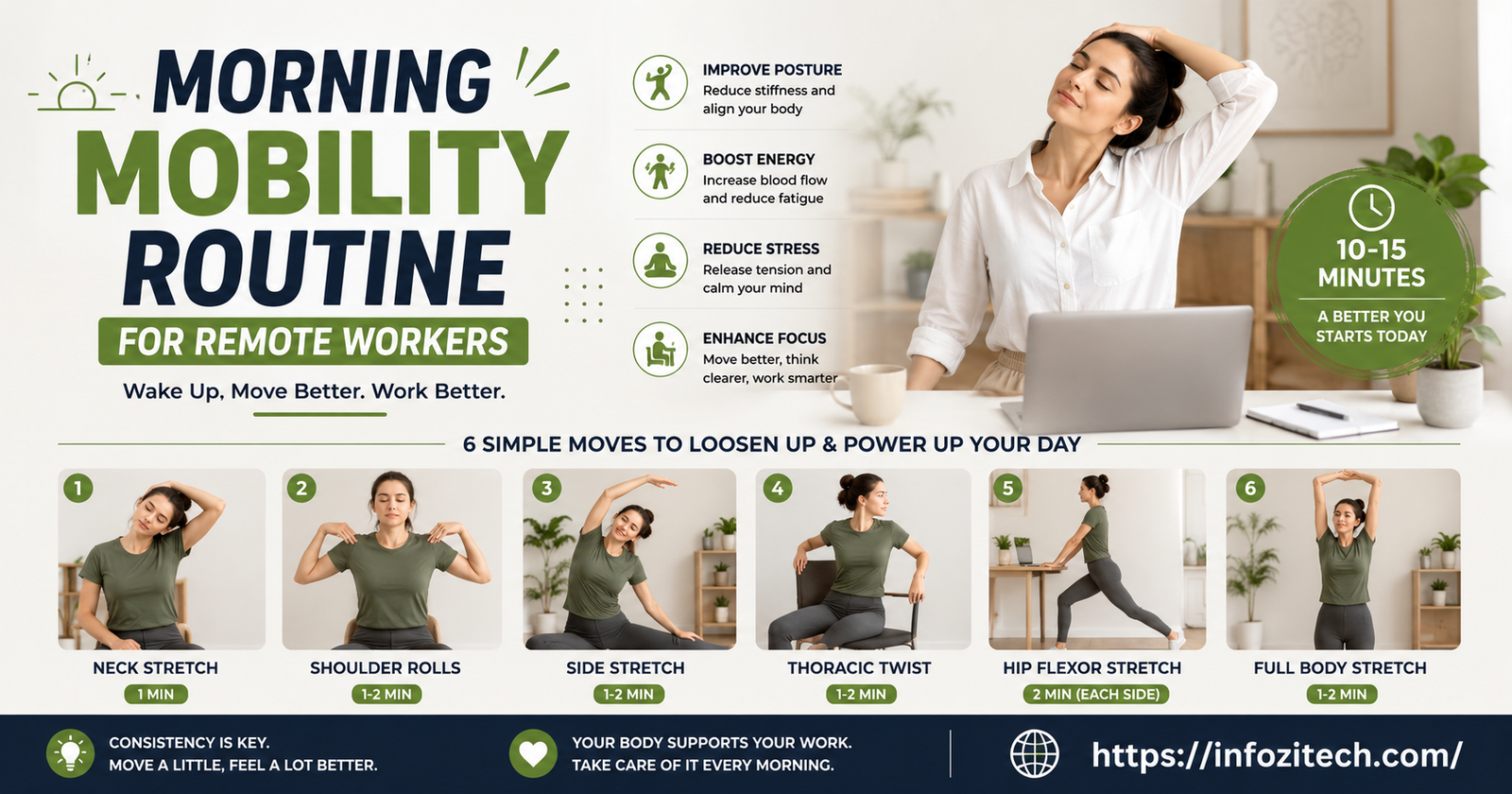
There’s a specific kind of stiff that comes from working from home, and it’s different from a regular desk job stiff, honestly. At an office, you’re at least forced to walk to a meeting room, or the printer’s on the other floor, or you grab coffee from somewhere that isn’t six feet from your desk. Working from home, a lot of us roll out of bed, maybe brush our teeth, and land directly in a chair that’s seen better days. No walk to the car. No stairs. Nothing. I did this for about a year before I noticed my lower back had basically seized up permanently, and it wasn’t until I added ten minutes of movement before opening my laptop that it actually eased off.
This routine’s built for exactly that gap — bed to chair, with nothing in between unless you make something happen. Ten minutes, no gym, no equipment beyond maybe a wall or a chair to balance on. Doable in pajamas, which honestly is half the appeal.
Why Remote Work Is Rougher on Your Body Than People Admit
Office jobs aren’t exactly great for your body either, let’s be clear, but at least there’s built-in movement scattered through the day that most people don’t even register as exercise. Remote work strips a lot of that out without anyone really deciding to.
The Commute You Lost Was Doing More Than You Realized
Even a short commute — walking to a train, parking further away than you needed to, whatever — added up to actual steps and actual movement before your body settled into a seated position for hours. Cut that out entirely and your first movement of the day sometimes doesn’t happen until lunch, which is a rough way to start asking your spine to sit still.
Home Setups Are Rarely Actually Ergonomic
Kitchen tables. Couches. A dining chair that was never meant for eight hours of sitting. Most home workspaces evolved out of necessity, not planning, and bodies pay for that slowly, over weeks and months, in ways that don’t show up right away but definitely show up eventually.
Nobody’s Making You Get Up
In an office, there’s a kind of social pressure — someone walks by, a meeting starts down the hall, you naturally shift and move throughout the day without thinking about it. At home, nothing is pulling you out of the chair except your own discipline, and discipline runs low most mornings, which is exactly why building movement in before the workday even starts matters so much.
Starting With the Spine: Undoing the Overnight Curl
Sleep tends to curl your body forward a bit, especially if you’re a side sleeper, and going straight from that position into another seated position compounds the problem before the day’s even begun.
Cat-Cow on the Floor or a Chair
On hands and knees, or seated if getting on the floor feels like too much first thing, arch your back and drop your belly down, then round it the other way, pulling your spine up like a cat stretching. Slow, ten reps. This is basically the single best thing for undoing overnight stiffness in the spine, and it takes maybe thirty seconds.
Standing Backbend
Hands on your lower back, gently lean backward, just a little, holding for a few seconds. Counteracts the forward curl that both sleep and sitting both push you toward, which is a lot of forward curling in a single 24-hour cycle if you think about it.
Seated or Standing Spinal Twist
Sit or stand tall, twist your torso to one side, hold onto something for support if you need to, hold for a few seconds, switch sides. Loosens up the mid-back specifically, which gets almost no attention otherwise and tends to lock up hard from hours of sitting square to a screen.
Waking Up the Hips Before They Lock In for the Day
Hips take the brunt of prolonged sitting more than almost anything else, and morning is the best window to counteract that before you’re back in the chair for another eight hours.
Standing Hip Circles
Hands on hips, rotate in a circle like a hula hoop, five each direction. Simple, a little goofy-looking, genuinely effective at loosening the hip joint itself rather than just the surrounding muscles.
Standing Hip Flexor Stretch
Step one foot back into a gentle lunge, keep your torso upright, hold a few seconds each side. Sitting all day shortens your hip flexors more than people realize, and this stretch directly counters that shortening before it locks in for another day of sitting.
Glute Bridges
Lying on your back, knees bent, feet flat, lift your hips and squeeze, lower back down, eight to ten reps. Wakes up the glutes, which basically go dormant from hours of sitting on them, and weak, sleepy glutes are a big part of why lower backs end up overworked and cranky.
Loosening the Neck and Shoulders Before the Screen Takes Over
Your neck and shoulders are about to spend hours locked in a forward-hunched position staring at a monitor, so this is the last real chance to loosen them up before that starts.
Neck Rolls and Chin Tucks
A few slow neck rolls, five each direction, followed by chin tucks — pull your chin straight back like you’re making a double chin on purpose, hold a second, release, ten reps. Chin tucks specifically counteract the forward head posture that screen work basically guarantees.
Shoulder Blade Squeezes
Pull your shoulder blades back and together, hold for a couple seconds, release, ten reps. Directly fights the rounded, hunched shoulder position that comes from hours of typing and a screen that’s usually positioned lower than it should be.
Doorway Chest Stretch
Stand in a doorway, forearm against the frame, gently lean forward until you feel a stretch across your chest, hold for twenty or thirty seconds each side. Chest muscles tighten up from that forward-hunched posture too, and a tight chest actually makes your shoulders round forward even more, so this one matters more than people expect.
Getting the Legs and Ankles Moving Before You Sit Back Down
Feels almost pointless to loosen your legs right before sitting on them for hours, but it actually still matters — better circulation and looser joints going into a sedentary stretch makes a real difference by afternoon.
Bodyweight Squats
Eight to ten slow squats. Wakes up the big muscles in your legs and gets blood moving before it has a chance to just pool from inactivity.
Ankle Circles
Standing or seated, lift one foot, circle the ankle ten times each direction, switch feet. Small joint, easy to forget, but ankles stiffen up fast from inactivity and it’s a cheap fix.
A Short Walk, Even Just Around the House
If you’ve got two or three extra minutes, walk around your place, up and down a hallway, whatever you’ve got. Doesn’t need to be outside, doesn’t need to be long. Just enough to get your heart rate up slightly and your legs actually moving before you sit back down for the first work block of the day.
Fitting the Whole Routine Into a Realistic Morning
None of this works if it becomes one more thing you feel guilty about skipping, so keep it loose enough to actually stick.
The Full Ten-Minute Version
Cat-cow, standing backbend, spinal twist. Hip circles, hip flexor stretch, glute bridges. Neck rolls, shoulder squeezes, doorway chest stretch. Squats, ankle circles, a short walk if you’ve got the time. Roughly ten minutes total, no equipment beyond maybe a doorway and a bit of floor space.
A Shortened Version for Rushed Mornings
If you’re slammed and only have three or four minutes, prioritize cat-cow, hip flexor stretch, and chin tucks. Covers spine, hips, and neck in the smallest amount of time, which is the trio that suffers most from a remote work setup anyway.
Do It Before Coffee, Not After
There’s something about moving first, before you’ve settled into the couch with a coffee and your laptop, that makes it far more likely to actually happen. Once you’re seated and scrolling email, the ten minutes has a way of quietly evaporating.
Final Thoughts
A morning mobility routine for remote workers isn’t really optional if you’re spending most of your day going straight from bed to chair with nothing in between, it’s just filling in a gap that used to get filled automatically by a commute, an office, some unavoidable walking. Ten minutes, spine to hips to shoulders to legs, before you open your laptop, and the stiffness that usually creeps in by early afternoon just doesn’t build up the same way. Small thing. Adds up more than it looks like it should.








2 thoughts on “Morning Mobility Routine for Remote Workers”