
Small Business Expense Tracking System: A No-Nonsense Setup Guide
Guy I know ran a landscaping business for almost two years off a literal shoebox of receipts. Not exaggerating. Come tax season, he’d dump the whole thing on his accountant’s desk and just hope for the best. Half of it was faded to nothing already; gas station thermal paper does that after a few months riding around in a glovebox, and he’d end up guessing at what was left. He wasn’t lazy. He was out running jobs, managing guys, keeping trucks from breaking down. Expense tracking just never felt urgent, right up until the year he lost close to four grand in deductions because he genuinely could not remember what half those charges even were.
That’s expense tracking for you. Never the flashy problem. Nobody dreams about categorizing fuel receipts when they start a business. But it’s one of those boring quiet systems, and it either quietly saves you real money or quietly costs you real money; there’s not much in between.
So here’s a practical walkthrough. What an actual expense tracking system looks like for a small business, why doing it from memory or a shoebox stops working way sooner than people think it will, and how you set something up without turning yourself into a part-time bookkeeper.
What a Small Business Expense Tracking System Actually Is
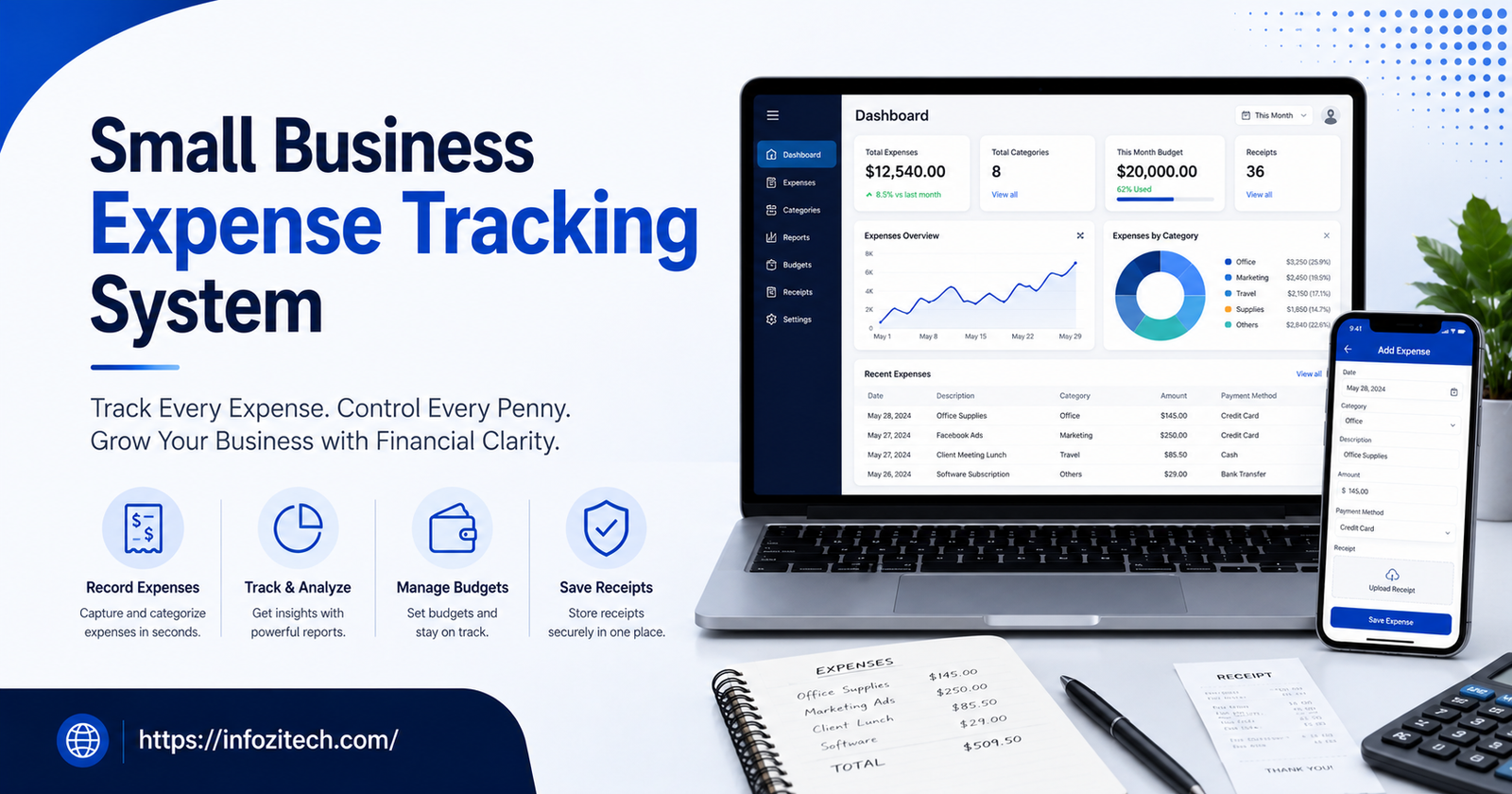
The core of it, really, is just having a consistent way to capture, sort, and store every business expense, so you know where the money went without reconstructing it later from vibes and a bank statement. Sounds simple. It is, mostly; the hard part was never the concept. It’s staying consistent with it.
A real system’s got a few pieces running at once. Expenses get recorded close to when they happen, not two months down the line. They get sorted into categories that actually mean something come tax time or budgeting time. And it’s all stored somewhere findable, somewhere you or your accountant can dig it up later without scrolling through old emails for twenty minutes.
Why “I’ll Just Remember It” Never Works
People genuinely think they’ll remember what that $47 charge from three weeks back was for. You won’t. Nobody does, not reliably, not for long. Even with a decent memory, you’re reconstructing context you never wrote down in the first place, and that reconstruction is exactly where deductions get missed, and categories get sloppy.
Not a discipline thing either; that’s what people get wrong about themselves usually. It’s a system thing. Asking your brain to hold onto receipt-level detail for months is asking it to do a job it’s just bad at.
Tracking Isn’t the Same as Keeping Receipts
A folder full of receipts isn’t tracking. That’s storage; that’s all it is. Tracking means those expenses are logged somewhere searchable, categorized, tied to a date and a reason. A shoebox of paper can’t tell you how much you spent on software last quarter. A real system can, in about ten seconds flat.
Why Small Businesses Keep Putting This Off
Roughly the same story every time. Founders figure expense tracking’s something you formalize later, once there’s an actual finance person around to own it. Until then, receipts in a drawer somewhere, maybe a spreadsheet updated whenever someone remembers, good enough for now, probably fine.
The Small-Scale Excuse
When you’re only doing forty transactions a month, sure, mostly you can keep it in your head. That illusion falls apart fast though, and it usually falls apart right when the business starts actually growing, which is exactly the moment you’ve got the least spare time to go fix it. Nobody pauses mid-growth spurt to say Let’s build a proper system now. It gets fixed in a panic. Right before tax season usually. Or after some audit scare. Or when a loan application asks for numbers nobody’s got ready.
The Real Cost of Skipping It
Missed deductions, obviously; that’s the headline cost. But there’s a time cost too: hours every quarter spent trying to reconstruct spending from bank statements and half-remembered context. Stress cost, that low hum of never quite knowing if the business is actually profitable this month or just looks that way on paper. And if you ever want a loan, an investor, or you’re trying to sell the thing eventually, messy expenses slow down every single one of those conversations, because someone’s got to clean it all up first before anyone takes the numbers seriously.
Building the System, Piece by Piece
Doesn’t need to be complicated to start. Genuinely, overcomplicating it is probably the single fastest way people abandon this within a month.
Pick One Place, Put Everything There
First real call to make. One tool. One place. Everything funnels there. Doesn’t matter enormously whether that’s dedicated expense software, a well-built spreadsheet, or whatever’s built into your accounting platform already. What matters is you’re not splitting things across three different systems, because that’s exactly how stuff starts slipping through.
Categories that tend to cover most small businesses, roughly:
- Software and subscriptions
- Travel and mileage
- Office supplies and equipment
- Marketing and advertising
- Meals and client entertainment
- Contractor and freelance payments
Tweak for your industry obviously. But a short list beats inventing forty hyper-specific categories nobody remembers to actually use right.
Log Things Close to Real Time
This is the part that decides whether the whole thing survives, honestly. Log weekly and you’ll keep doing it. Plan to log monthly and you probably won’t, you’ll tell yourself you will and then you won’t. Plan to do it at tax time and, well, you’re basically back at the shoebox, just with extra steps.
Most tools these days let you snap a photo the second you get a receipt, pulls the amount and vendor automatically. Thirty seconds in the moment, saves you an entire afternoon of reconstruction three months later.
Separate Business and Personal, No Exceptions Here
Still running business stuff through a personal card because it’s easier sometimes? Stop doing that. This one habit alone causes more headaches in expense tracking than almost anything else on this list. A dedicated business card makes categorizing dramatically simpler, the transactions are already isolated from your personal spending, and it protects you legally too, especially if you’re an LLC and actually want that liability wall to mean something.
Reconcile on a Schedule, Not Whenever You Get Around to It
Pick a day. Weekly, biweekly, whatever actually fits your week, and stick to it. Reconciling means checking what you logged against your actual bank and card statements, catching stuff that slipped through, fixing anything miscategorized while it’s still fresh in your head. Wait a full month and do it then instead, you’ll spend triple the time untangling it, because by then half the context is just gone.
Tools Worth Looking At
Range here from dead simple to fairly sophisticated, and honestly the right one just depends on your transaction volume and whether you’ve got staff submitting their own expenses too.
Spreadsheets Still Hold Up, For a While
Solo operation, low volume, a well-built spreadsheet genuinely does the job fine. Catch is discipline, no automatic receipt capture, nothing nudging you to update it, no reminders. It works exactly as well as you’re willing to keep maintaining it, which for most people is a few months before it quietly stops getting touched.
Dedicated Expense Apps
Once you’ve got real volume, dedicated apps earn their keep. Receipt scanning, categorization that improves over time, direct bank feeds so nothing’s manually entered. Most plug into common accounting software too, so data isn’t getting re-typed somewhere else down the line.
Accounting Software’s Built-In Tracking
Already using accounting software for invoicing or payroll? Check what it does for expenses before bolting on a whole separate tool. Everything under one roof means the expense data flows straight into your financial reports, no manual exporting, no double handling, which removes an entire category of mistakes basically for free.
Mistakes That Quietly Kill Expense Tracking
Too Many Categories
Forty categories sounds thorough on paper. In practice every expense takes longer to log, and you start guessing, because remembering the exact right one out of forty isn’t realistic for anybody. Fewer, clearer categories beat a long precise list nobody actually uses correctly, every time.
Letting Receipts Pile Up “For Later”
There is no later. There’s just a bigger pile and a worse afternoon waiting for you eventually. Batch-it-later is where most expense systems go to die, quietly, over a few months.
Never Actually Looking at the Data
Tracking and reviewing are two separate habits, and people mix them up constantly. Plenty of business owners log everything diligently and never once glance back at what those categories are actually saying. Whole point of tracking is spotting the patterns, a subscription nobody uses anymore, a category creeping up month over month without anyone noticing. Skip the review part and you’re just collecting numbers for their own sake.
No Backup If the Tool Dies
Apps crash. Get discontinued. Or you switch providers and the export comes through garbled. Whatever you’re using, make sure you can pull your data out in a usable format every so often, so one tool failure doesn’t wipe out months of records in a single afternoon.
Is Your System Actually Working
Working system means you can answer, in under a couple minutes, how much you spent last month and roughly where it went. If that question makes you wince, or send you digging for a spreadsheet you haven’t opened in six weeks, it’s not working yet. Doesn’t matter what tool you’re using.
Check in every quarter or so. Are things getting logged consistently, or is there a backlog quietly building somewhere in the background. Do the categories still make sense, or has the business shifted enough that they need a refresh. Small tweaks now save a much bigger headache later, usually right around tax time, which is exactly when you don’t want any headaches at all, obviously.
Final Thoughts
A small business expense tracking system doesn’t need to be sophisticated to actually work. It needs to be consistent, and it needs to fit how you already operate day to day, otherwise it just becomes one more thing you meant to keep up with and quietly stopped. Pick one tool, keep business and personal spending apart, log things close to real time, and actually check in on it instead of letting it pile up in a drawer somewhere.
The businesses that get this right usually aren’t running some elaborate financial setup behind the scenes. They just got tired of guessing at faded receipts every April and finally built something simple enough to stick with.







2 thoughts on “Small Business Expense Tracking System: A No-Nonsense Setup Guide”