
Local Service Business Automation Ideas That Actually Save Time

Talk to a plumber, a landscaper, a cleaning business owner- doesn’t matter which- for more than five minutes and you’ll hear some version of the same complaint eventually. Not enough hours in the day. Too many calls coming in while you’re elbow-deep in someone’s water heater and can’t answer, and by the time you call back, the customer’s already booked the guy down the street who happened to pick up on the first ring. I’ve heard this story, almost word for word, from probably a dozen different service business owners over the years now. Different trades. Same problem every single time.
Here’s the thing, though — most of that lost time and lost business isn’t actually a staffing problem, not really. It’s a process problem. And a lot of it, maybe most of it honestly, can get fixed or at least drastically cut down with automation that doesn’t require hiring one more person or learning to code anything. This isn’t about stripping out the personal touch that makes a local business feel local; that’s the last thing you want. It’s about making the boring, repetitive stuff happen on its own so you can actually focus on the work in front of you, and the customer standing right there.
Why Local Service Businesses Are Weirdly Perfect for This
Local service businesses have a strange structure compared to most small businesses. The owner is usually the technician and the salesperson and the bookkeeper and the customer service rep, sometimes all four in the same hour, sometimes literally mid-job. Rarely a dedicated admin person around, and if there is one, they’re already stretched across ten other things nobody’s paying attention to.
That combination — one person wearing five hats, the phone constantly interrupting whatever you’re doing, jobs that have to happen at a specific place and time no matter what — makes these businesses genuinely well-suited to automation built for scheduling, communication, follow-up. A restaurant’s got a fairly predictable rhythm to it. A service business deals with emergencies, cancellations, drive time, and every customer convinced their job is the most urgent thing on your whole list that day. Automation doesn’t make the chaos go away. It just handles the repetitive parts of managing that chaos so a human doesn’t have to sit there doing it by hand.
Booking and Scheduling Automation
Online Booking That Works While You’re Not
If someone can only book by calling during business hours, you’re losing the people searching for services at nine at night on a random Tuesday, and that happens more than you’d think. An online system showing real availability lets people grab a slot whenever it works for them, not just whenever you happen to be free to pick up the phone. Sounds small. Isn’t. A huge chunk of lost business in this industry comes down to nothing more than bad timing on a single phone call.
Automatic Appointment Reminders
No-shows and last-minute cancellations quietly bleed money, and most owners don’t realize how much until they actually track it for a month straight and see the number. Automated texts sent a day before, then again an hour before, cut no-show rates noticeably, usually with barely any effort once it’s set up. Some systems let people confirm or reschedule with one tap, which kills off a lot of the back-and-forth phone tag that used to eat up a whole afternoon.
Route and Schedule Optimization
For businesses running multiple jobs a day across a spread-out area, route tools can rearrange the day to cut drive time between stops. Not glamorous. But shaving off even thirty minutes of driving on a busy day adds up over a month to real extra capacity, capacity you can use to squeeze in one more job instead of just stretching your hours later into the evening.
Customer Communication Automation
Missed Call Text-Back
Simple one, and honestly this should just be standard by now, though plenty of businesses still skip it. Call goes unanswered, the system fires off a text within seconds, something like “sorry we missed you, how can we help.” Keeps the conversation alive instead of just losing that person to whoever picks up next on their list. For a lot of trades, this one feature alone recovers a real chunk of business that would’ve otherwise disappeared into silence.
Automated Follow-Up After a Job
A lot of businesses finish the work and then just… stop talking to the customer. Nothing. No check-in, no follow-up. A short automated message a day or two later, asking if everything’s holding up, whether they’ve got questions, costs nothing to send and builds actual goodwill. Also opens a natural door into the next thing.
Review Request Automation
Reviews are basically the lifeblood of local search, and yet plenty of businesses forget to ask, or ask sometimes and not other times depending on how the day went. An automated request sent a set number of hours after the job’s done, with a direct link so there’s zero friction, tends to bring in way more reviews than relying on a technician remembering to ask on a good day and forgetting entirely on a busy one.
Invoicing and Payment Automation
Automatic Invoice Generation
Manually building invoices after every job eats more time than most owners realize, especially once you count the time spent double-checking numbers and fixing formatting. Tools that generate an invoice the moment a job gets marked done, pulling pricing straight from the original quote, cut that admin work down to almost nothing.
Payment Reminders and Recurring Billing
Chasing late payments is nobody’s favorite job, and for a lot of owners it just gets pushed off until it’s an actual cash flow problem staring them in the face. Automated reminders sent on a schedule take that awkward chasing off your plate entirely, no more awkward texts wondering if you should follow up again. And for businesses with recurring contracts, lawn care, pest control, HVAC maintenance plans, automated recurring billing means you’re not manually invoicing the same fifty customers every single month by hand.
Expense Tracking Integration
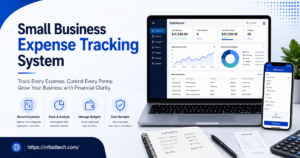
Connecting invoicing to your bookkeeping software so income and expenses sync automatically instead of a manual data-entry session every week, or worse, a frantic scramble every quarter trying to reconstruct what happened. This one saves time, sure, but honestly it saves more in accountant fees and reduced tax-season panic than almost anything else on this list.
Marketing Automation for Local Businesses
Automated Email and Text Campaigns
Seasonal reminders, furnace tune-ups before winter hits, gutter cleaning before fall, lawn treatments early spring, can get scheduled way in advance and sent automatically without you having to remember to do it manually every single year the season rolls around again. Keeps you top of mind right when customers start thinking about the service anyway, before they’ve gone and googled somebody else instead.
Referral Program Automation
Plenty of local service businesses get real word-of-mouth business but have no actual system for encouraging or tracking it, it just happens or it doesn’t. Automated referral programs that fire off a discount code or reward the moment a referral converts turn a passive habit into something a bit more structured, without you having to manually track any of it yourself.
Lead Follow-Up Sequences
Someone requests a quote, doesn’t book right away, and a lot of businesses just… let that lead go cold and forget it ever happened. An automated follow-up sequence, spaced out over a week or two, checking in without being pushy, brings back a meaningful chunk of people who genuinely meant to book but just got busy and let it slip.
How to Actually Start Without Getting Overwhelmed
Trying to automate everything at once is a great way to give up entirely within a week, seen it happen more than once. Pick the single biggest pain point first. Missed calls costing you the most business? Start there with a text-back system. No-shows the real drain on your schedule? Start with reminders instead.
Get one piece actually working, watch the results for a couple weeks so you’ve got real numbers instead of a guess, then layer on the next thing. Trying to overhaul the whole operation in one weekend usually just leaves you with half-configured systems that quietly stop working within a month because nobody had the time to actually finish setting them up right in the first place.
Also worth checking before you buy anything new: whether your current scheduling or invoicing software already has these features built in and just switched off somewhere. Surprising how many business owners pay for a second tool to do something their existing software already handles, buried a couple menus deep in settings nobody ever bothers opening.
Final Thoughts
Automation in a local service business was never about replacing the human element that actually makes customers trust you and stick around. It’s about making sure the repetitive, forgettable stuff, reminders, follow-ups, invoices, missed-call texts, happens reliably in the background so you can spend your actual time and attention on the work itself and the person standing right in front of you.
Start small. Fix the biggest leak first. Build from there. The businesses getting the most out of this aren’t the ones who bought every tool on the market in one afternoon out of panic. They’re the ones who fixed one real problem at a time, actually stuck with it long enough to see it working, and let the time savings pile up naturally from there.






2 thoughts on “Local Service Business Automation Ideas That Actually Save Time”