
Zero Budget Brand Building for New Startups
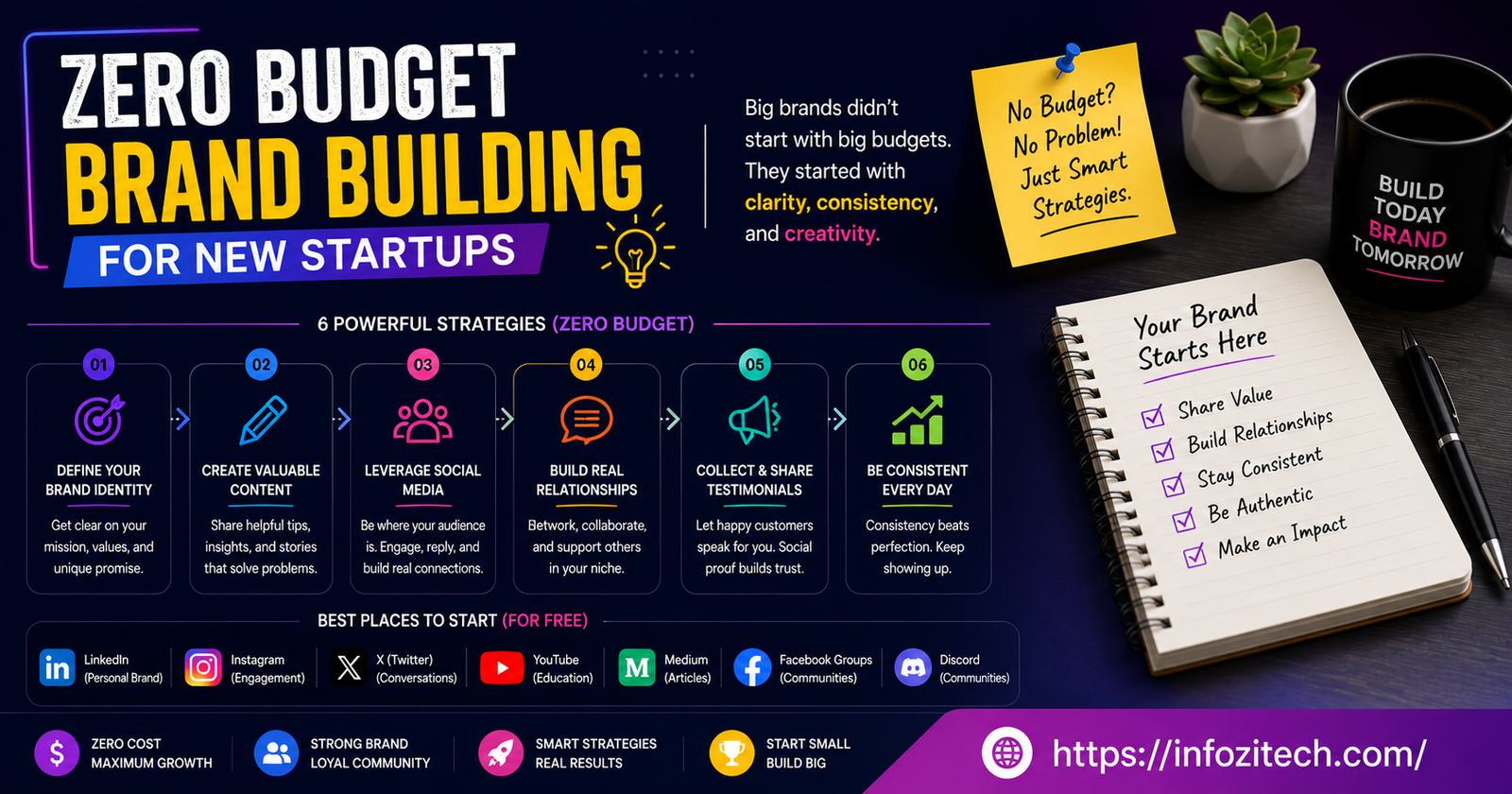
A friend of mine launched her first product a few months back, and the first question she asked me wasn’t about customers or pricing. It was what font to use for her logo. Kerning. She had zero site traffic at that point, no list, nothing — and she was stuck on kerning. I get the instinct though. Brand feels like the fun, controllable part when everything else about starting a company feels slow and out of your hands and honestly kind of terrifying.
So here’s the part nobody wants to hear when they’re broke and just getting going: brand isn’t a logo. Isn’t a color palette, isn’t some font pairing you found on a design blog at 1 am while avoiding actual work. Brand is what people say about you when you’re not in the room to defend yourself. That costs nothing. Zero dollars. It costs attention and consistency and, honestly, a willingness to look a little rough around the edges for a while — which, bootstrapping, you’re going to look rough anyway, so you might as well own it on purpose instead of pretending otherwise.
Why Brand Matters Even Before You Have Money
It’s Not About Looking Big, It’s About Being Trustworthy
New founders assume brand means looking established. Looking bigger, looking like you’ve been at this for years. Wrong instinct, mostly, and I say that having made it myself early on. People don’t buy from small companies because they seem big. They buy because something feels real, feels consistent, and there’s clearly an actual human on the other end who’ll respond if things go sideways. A scrappy, honest brand converts better, more often than not, than a polished one performing a size it hasn’t earned yet.
The Danger of Waiting Until You “Have Budget”
Plenty of founders tell themselves the brand gets built once revenue shows up. Backwards. Revenue tends to follow trust, not the other way around, and trust gets built through small unglamorous stuff — answering messages yourself, showing up in the same place over and over, being visible before you’re impressive. Wait for budget, and you’re usually just waiting. Full stop. The habits you needed early never got built, and now you’re trying to catch up from behind instead of ahead.
Start With a Story, Not a Logo
Why People Remember Stories and Forget Taglines
Nobody’s ever picked a coffee shop for its tagline. They remember the barista who knew their order without asking, or a founder’s rambling post about why they started the thing at all. Your origin story — messy, a little embarrassing maybe, definitely not corporate-sounding — is free marketing a logo redesign will never touch. Say why you started this. What broke that made you fix it. That’s the actual brand. Everything else is decoration on top.
Writing Your Story Without Sounding Like Everyone Else
Skip the “we’re passionate about disrupting X” language, please. Just say what happened. Couldn’t find a decent version of X so I made one. My mom needed Y, and every option out there sucked. Plain honesty like that beats a mission statement every time it’s tried, and it costs nothing but the nerve to sound like an actual person instead of a brand deck somebody workshopped in a meeting.
Building Brand Through Consistency, Not Money
Show Up in the Same Places, Same Way, Repeatedly
Consistency is the whole engine here, and it’s completely free, which is the part people undervalue most. Same photo everywhere. Same tone whether you’re posting, replying to a stray comment, or answering a support email at midnight because you can’t sleep anyway. People start recognizing you not because you spent anything, but because you kept showing up sounding like the same person. That recognition — that’s brand. Once you strip away all the design talk, that’s basically the whole thing.
Pick One or Two Channels and Actually Commit
New founders spread thin across five platforms and end up forgettable on every single one. Pick the one or two places your actual customers already hang out- could be a niche forum, could be Instagram, could just be leaving genuinely useful comments on bigger accounts in your space- and go all in there instead of a little bit everywhere. A recognizable presence in one place beats a thin one spread across six, every time.
Use What You Already Have
Your Own Voice Is a Brand Asset
Founders underrate how far personality carries a brand before there’s budget for anything else. People followed early Wendy’s Twitter for the voice, not a logo. You don’t need to be witty exactly. Just consistent, just human. Write the way you actually talk. Don’t outsource your voice to sound corporate, not yet — maybe not ever, if what you’ve got is working.
Customer Conversations Are Marketing Material
Every DM, every stray review, every offhand comment somebody leaves is free brand material just sitting there. Screenshot the good ones, with permission obviously, and share them. Not bragging, just proof that real people are actually using the thing. Does more for trust than a curated testimonials page ever will, because it feels caught in the act instead of staged for the website.
Free Tools That Do the Job of Expensive Ones
Design Tools That Cost Nothing
Canva’s free tier handles social graphics, basic logos, one-pagers — all of it — and looks fine, genuinely fine, if you’re not trying to go head to head with an actual design team. Google Fonts gets you a decent pairing without paying anyone a cent. None of it has to be perfect. Has to be consistent, which loops right back to the earlier point: same colors, same fonts, every time, everywhere you show up.
Writing and Content Without a Copywriter
You don’t need an agency to write your homepage. Write it the way you’d explain the thing to a friend at a bar, then go back and trim the fluff. Overwritten copy is usually worse than plain copy anyway, honestly — people can smell when something’s been workshopped by six people into total meaninglessness.
Getting Attention Without Ad Spend
Communities Are the Original Free Marketing Channel
Reddit threads, niche Discord servers, Facebook groups built around your exact problem — these existed long before ad platforms did, and they still work, arguably better, because trust is already baked in among the people there. Show up helpful first. Not pitching, just useful. Answer questions. Mention the product only when it’s actually relevant, not as a drive-by plug nobody asked for. People remember who was genuinely useful longer than they remember who was selling.
Partnerships With People Your Size
Forget the big influencer, at least for now. You need three or four other small accounts, other tiny startups in roughly the same boat, and a willingness to promote each other honestly. Shoutouts, small collabs, guest posts on each other’s blogs- none of it costs a dime, and it compounds because you’re both building audience at the same time instead of fighting over the same small pool of eyeballs alone.
Consistency Compounds When You Don’t Have Money to Speed It Up
Brand Building Is Slow On Purpose When You’re Broke
Without ad spend, brand grows through repetition over time instead of a sudden spike from some big flashy campaign. Frustrating if you’re impatient, and most founders are, myself included back then. But it’s more durable too, because trust built slowly through actual repeated behavior tends to outlast trust bought quickly through a launch. Slow isn’t a consolation prize here. It’s often just how real trust gets built in the first place, money or no money.
Track What’s Actually Working, Not What Feels Good
Easy to keep posting the same kind of content because it’s comfortable, even once it’s stopped landing. Pay attention instead to what actually gets replies, gets shared, gets someone saying “found you because of that post.” Do more of that specific thing. Ignore follower counts as a measure of anything real — they don’t pay rent, and they don’t tell you whether the brand’s actually working underneath the number.
When You Do Eventually Have Budget
Spend It on Amplifying What Already Works
Once there’s money in the account, the temptation is a full rebrand, a shiny new logo, a professional photoshoot. Resist that at first, if you can. Spend early budget amplifying what’s already resonating instead — boost the post that got real engagement, run ads to the page already converting organically — rather than starting over on something completely untested. If the zero-budget version of your brand is working, that’s your foundation. Don’t tear it down just because you can suddenly afford not to.
Brand building without money isn’t the lesser version of the real thing. For a lot of startups, it’s honestly the better version, because it forces you to build on substance instead of paying to fake the appearance of trust you haven’t earned yet. The logo can wait. The story can’t, not really. Neither can the voice, or the showing up again and again looking like the same person in the same place. None of that costs anything. It just costs starting today instead of once you “have budget,” which, let’s be honest, is a date that keeps moving.


2 thoughts on “Zero Budget Brand Building for New Startups”