
Edge AI for Small Businesses: A Practical Guide to Getting Started
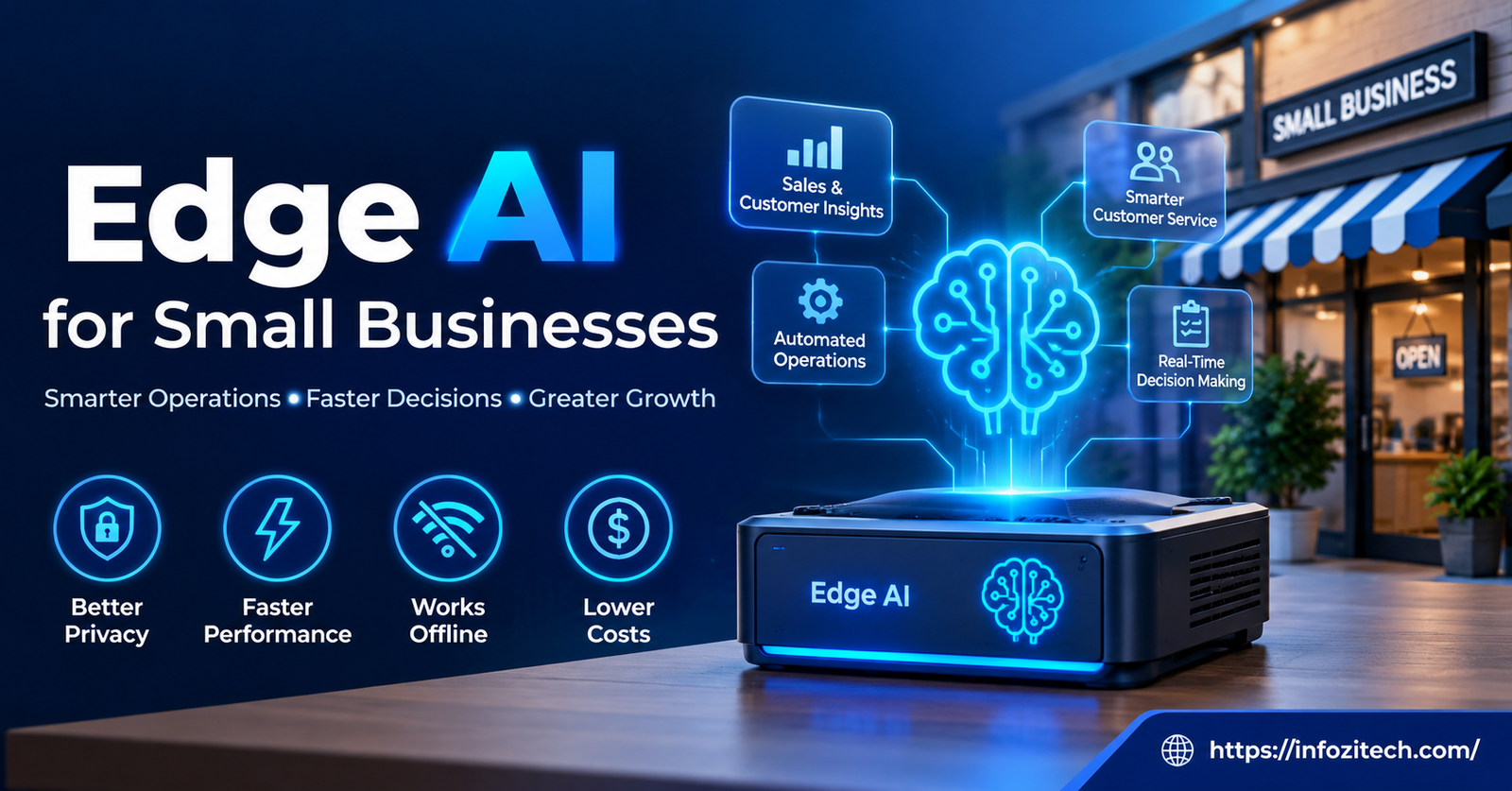
I mentioned “edge AI” to a friend who runs a small hardware store last month, and she just stared at me. Then said, “Is that like, robots?” No. Not robots. But I get why people assume this stuff is only for huge companies with server rooms and IT departments. It isn’t. That’s actually the whole point of this article.
Small businesses are using edge AI right now, today, without anyone noticing, because it doesn’t look like some flashy new gadget. It looks like a camera—a sensor. A little box bolted under a shelf. Boring on the outside. Useful on the inside.
Let’s get into what it actually is, why it might matter to you, and how you’d even get started.
What Is Edge AI, Actually?
Okay so. Strip away the buzzwords for a second.
“Edge” means devices out at the edge of a network — cameras, sensors, point-of-sale machines, tablets, your phone probably. Stuff that’s physically close to wherever the data gets made, instead of some server sitting in a warehouse two states away.
“AI” just means software that notices patterns or makes small decisions instead of following one fixed script every single time.
Smash those together and edge AI is: AI that runs right there on the device. Not shipped off somewhere else to think about it and mail the answer back.
Cloud AI vs Edge AI
Most people picture cloud AI when they hear “AI” — chatbots, recommendation engines, the whole shebang. Data travels out over the internet, gets crunched far away, comes back a few seconds later with an answer. Fine for lots of things. Not fine for everything. There’s lag. There’s the internet dependency. There’s the question of where exactly your data just went.
Edge AI skips all that. The device does its own thinking. A camera counting people walking by. A sensor that catches a machine starting to sound wrong before it actually breaks. No round trip. Just — it happens, right there, immediately.
Why Should a Small Business Even Care
I used to assume this was factory stuff. Big-retailer stuff. Turns out a handful of things about edge AI make it weirdly well suited to smaller operations, maybe even more than the big guys.
Cheaper, Over Time
Cloud AI tools usually charge by usage. More data through the pipe, bigger bill at the end of the month. Edge AI keeps things local, so a lot of that cost just doesn’t happen. If you’re the kind of owner who actually reads your bills line by line (most small business owners are, because they have to be), that difference shows up.
Speed, When Speed Actually Matters
Not every situation needs instant anything. But some do. A defective part rolling down a small production line. A shelf going empty and nobody noticing for an hour. Waiting five seconds for a cloud server to respond isn’t good enough in moments like that. Edge AI reacts now, because “now” is where it lives.
Works Even When Your Internet Is Garbage
Not every shop has fiber internet piped into a shiny downtown office. Food trucks. Rural stores. A mobile mechanic working out of a van in a field somewhere with one bar of signal. Edge AI doesn’t need a constant connection to keep functioning, and that matters more than people think until their Wi-Fi drops mid-transaction.
More Control Over Data
A lot of owners — especially in healthcare, retail, anything involving people’s faces or purchase habits — are nervous about shipping customer data off to some third-party server they’ve never seen. And honestly, they should be a little nervous. Edge AI keeps a lot of that information right on the device. Less exposure if something goes wrong. Fewer compliance headaches later.
Okay, But What Does This Actually Look Like
Talking in the abstract only gets you so far. Here’s where it shows up in real businesses right now.
Cameras That Actually Do Something
More small shops and warehouses are switching over to AI-enabled cameras. Ones that flag weird activity, count foot traffic, catch something suspicious — and all of that gets processed right on the camera. Not streamed somewhere else first. Faster alerts, and the monthly bill is noticeably smaller than the old cloud-video setups.
Shelves That Tell You When They’re Empty
Instead of a teenager walking the aisles every hour with a clipboard (I did this job in high school; it’s tedious), some retailers now have sensors or cameras that flag low stock automatically. Doesn’t replace your whole inventory system. Just catches the gap before a customer does.
Catching a Breakdown Before It’s a Breakdown
Small manufacturers, repair shops — sensors on the equipment pick up on vibration, heat, weird sounds, whatever hints something’s about to go wrong. Because it’s processed on the spot, you get a warning right then. Not two days later in some emailed report nobody opened yet.
A Slightly Smarter Storefront
Digital signs and kiosks that adjust based on who’s standing nearby or what time it is, without sending any video off-site at all. Small thing. Adds up to a better experience without handing customer footage to a third party.
Talking to Customers Across Languages
Restaurants, clinics, places with a mixed-language customer base — some are trying out voice tools that translate right there on a device. No lag waiting for a cloud server. No monthly fee stacking up either.
The Doubts People Bring Up (Which Are Fair, Mostly)
I’m not going to pretend this is flawless. Some of the hesitation makes sense.
“This has got to be expensive.”
Used to be. Hardware costs for this stuff have come down a lot the last few years — AI-capable cameras, small chips, sensors. Plenty of businesses start with literally one device. See if it does anything. Go from there.
“I don’t have anyone who knows tech.”
You mostly don’t need to. A lot of these products are built now assuming the buyer isn’t a computer scientist. Plug it in, walk through a setup screen, done. Vendors figured out their customers aren’t all enterprise IT teams a while back.
“What if it’s outdated in two years?”
Reasonable worry, this moves fast. Best answer is: don’t go all in at once. One camera. One sensor. One problem. If something better shows up later, you’re not stuck with a pile of expensive stuff you have to replace all at once.
A Way To Actually Start, Without Overthinking It
If this sounds decent but a little much, here’s roughly how I’d approach it.
Pick one problem. Just one. Slow checkout lines, or a machine that keeps breaking, or shrinkage you can’t explain, or shelves going empty without warning. Don’t try to fix everything with one purchase.
Start stupidly small. One device. That’s it. Enough that you can actually tell, in a month or two, whether it helped or not.
Find a vendor who gets it. Not every company selling this stuff is thinking about a business your size — look for the ones with smaller pricing tiers and support that doesn’t assume you’ve got a tech department down the hall.
Then actually check the numbers. Don’t just vibe it. Did it save time? Money? Did customers notice anything different? Write it down, even roughly.
If it worked, add more. Slowly. Rushing to scale before you know it’s working is how people end up with a closet full of gadgets nobody uses.
Why This Isn’t Just Another Tech Fad
Here’s the bigger thing going on underneath all this. Privacy rules are tightening. Customers are paying more attention to where their data goes than they used to — people ask now, “wait, is this camera recording me, where does that go.” Keeping the processing local isn’t just a technical nicety anymore. It’s becoming part of how a business earns trust, whether the owner thinks of it that way or not.
And the hardware keeps getting cheaper. What used to be locked behind a big corporate budget and a data science team is drifting down to something a shop owner, a small clinic, a family restaurant can actually afford and actually use.
Final Thoughts
You don’t need a huge budget or a computer science degree to start messing around with this. What edge AI actually offers a small business is pretty grounded stuff — faster decisions, lower costs over time, more control over what happens to customer data, and something that keeps working even when the internet doesn’t.
The businesses that get the most out of it probably won’t be the ones buying every new gadget that comes out. They’ll be the ones who pick one real problem, try one focused fix, and build from there — slowly, on their own terms. Big companies usually set the pace on this stuff. Edge AI might be one of the few technologies actually built with the smaller guy in mind.



2 thoughts on “Edge AI for Small Businesses: A Practical Guide to Getting Started”