
Football Footwork Practice Without Equipment
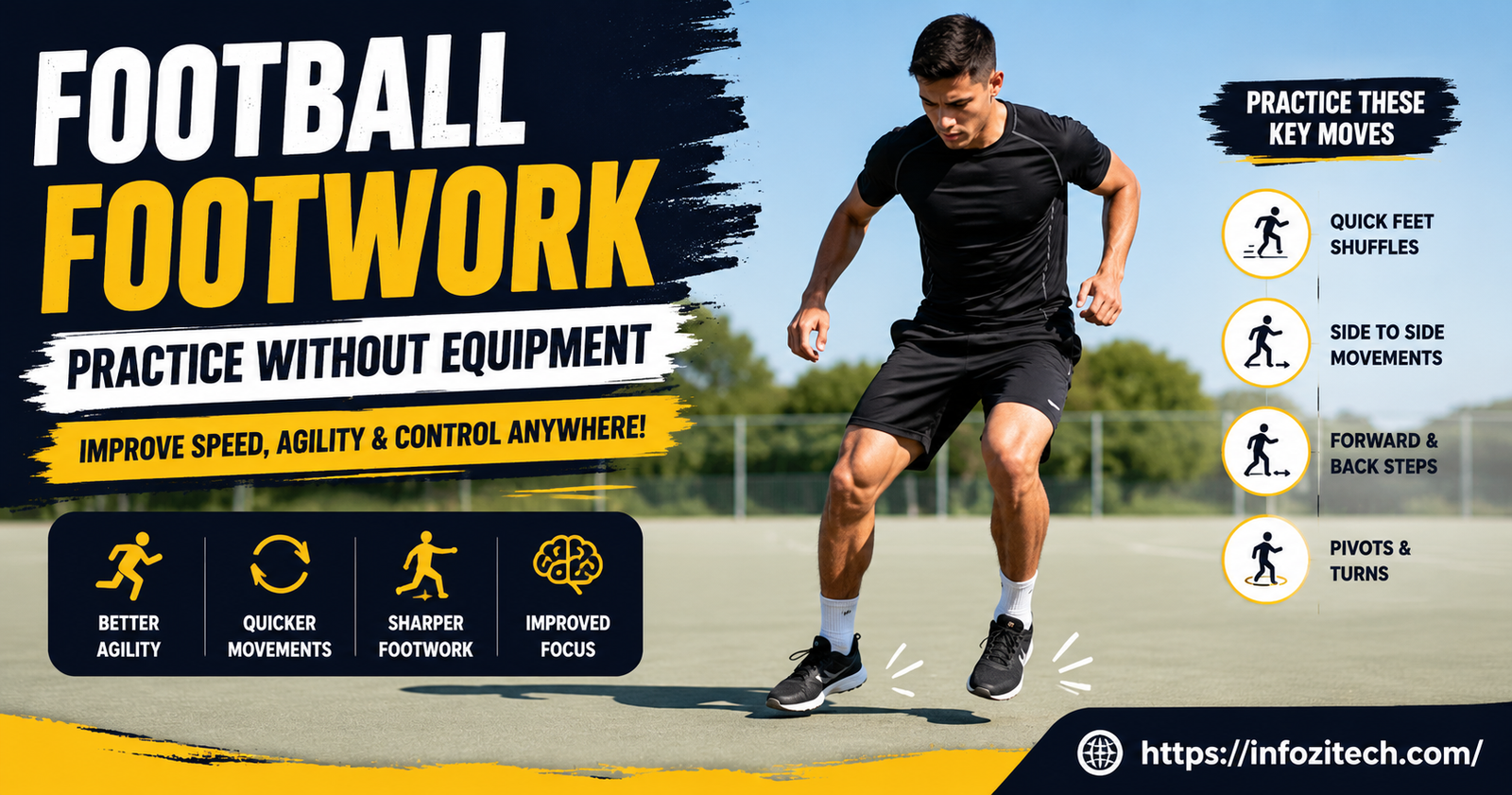
Ask a player what’s holding their game back, and equipment’s rarely the honest answer. It’s footwork. Nearly every time. And the annoying part is everyone assumes you need an agility ladder and a garage full of cones before you can even start working on it — you don’t, not really. Coached youth football for a few seasons, and the kids who got better fastest weren’t the ones with the fanciest bag of gear. They were the ones out in the driveway, no ladder, no cones, just drilling the same basic patterns over and over until it stuck.
So here’s a full routine: driveway or backyard or a patch of grass at the park, doesn’t matter which—nothing to buy. Your body, maybe a couple sticks or chalk lines if you want something to look at, though honestly even that’s optional.
Why Footwork Matters More Than People Think
Strength and speed get all the attention, but football’s really a game decided in tight spaces and split-second direction changes, and that’s footwork territory, not raw speed territory.
Quick Feet Beat Fast Legs in Tight Spaces
A defensive back with elite straight-line speed but sloppy footwork gets beat constantly in coverage, because coverage isn’t a straight sprint; it’s stopping, redirecting, mirroring a receiver’s hips. Same goes for a lineman, a running back cutting through a gap, a receiver setting up a route. The actual moment that decides most plays happens in a tiny space where footwork, not top speed, wins.
Balance Is the Foundation Under Everything Else
Good footwork isn’t really about foot speed alone; it’s about staying balanced while your feet move fast, which is a different skill. Players with sloppy balance look fast in isolation but get knocked off their feet or lose control the second there’s contact or a sudden change in direction. Balance work and footwork work basically go hand in hand, you can’t really separate them.
Warming Up the Feet and Ankles First
Jumping straight into fast footwork drills on cold ankles is asking for a rolled ankle, so a few minutes of warm-up actually matters here, not just as an afterthought.
Ankle Circles and Rocks
Lift one foot, rotate the ankle in circles, ten each direction, switch feet. Follow with heel-to-toe rocks, standing, ten reps. Wakes up the joint before you ask it to do anything quick and reactive.
Light Jogging in Place
Thirty seconds, easy pace, just to get blood moving and raise your heart rate slightly before anything more explosive.
A Few Bodyweight Squats and Lunges
Eight to ten squats, then a few walking lunges if you’ve got the space, maybe five per leg. Gets the hips and knees moving through range before the fast, choppy stuff starts.
Basic Footwork Patterns Anyone Can Practice
These don’t need any equipment at all, just enough open space to move around a little, maybe a ten-foot stretch of driveway or grass.
High Knees
Run in place or move forward slowly, driving your knees up toward your waist as fast as you can while staying light on your feet. Thirty seconds, rest, repeat two or three times. Builds the quick, choppy foot turnover you actually need in game situations.
Butt Kicks
Same idea, opposite direction — heels kicking back toward your glutes as you jog in place or move forward slowly. Thirty seconds, a few rounds. Works the hamstrings and reinforces quick foot recovery off the ground.
Lateral Shuffles
Get into an athletic stance, knees bent, and shuffle sideways for about ten feet, then shuffle back. This is basically the exact movement a defensive back or lineman uses constantly, and it translates directly, no equipment required, just space to move side to side.
Carioca Steps
Cross one foot over the other, then behind, moving sideways in a weaving pattern, about ten feet each direction. Feels awkward the first few times if you haven’t done it before. Stick with it; it builds hip mobility and coordination that shows up in cutting and change-of-direction moments on the field.
Reaction and Change-of-Direction Drills
Football rarely happens in a straight line, so drills that force quick, unpredictable direction changes matter just as much as the basic patterns above.
Mirror Drills With a Partner
If you’ve got someone to practice with, stand facing each other about five feet apart. One person moves side to side or forward and back randomly; the other mirrors their movement as closely as possible. No equipment, just two people and a bit of space, and it’s genuinely one of the best drills for reactive footwork there is.
Self-Directed Cutting Drills
Pick a spot ten feet ahead, sprint toward it, plant your foot, and cut hard to one side, then repeat cutting the other direction next rep. Alternate which foot plants and which direction you cut so you’re not just training one side.
Stop-and-Go Sprints
Sprint for about five yards, come to a complete stop under control, then explode into another sprint. This trains the deceleration piece that a lot of footwork training skips over, and deceleration under control is honestly just as important as the acceleration everyone focuses on.
Position-Specific Footwork You Can Practice Alone
Different positions lean on slightly different footwork patterns, and you can drill most of these without any equipment either.
Defensive Back Backpedal and Break
Backpedal for about five yards keeping your hips low and your weight balanced, then plant and break forward at an angle like you’re closing on a receiver. Repeat breaking to both sides evenly.
Offensive Line Kick Slide
Stand in a stance, then slide laterally while staying low, like you’re setting up to pass block against a rusher coming off the edge. Keep your feet from crossing over each other, which is the common mistake here.
Running Back Jump Cuts
Jog forward, then plant off one foot and cut hard laterally in a single quick motion, almost like a hop to the side. Repeat cutting off both feet so you’re not favoring one direction.
Receiver Route Footwork
Practice the footwork of a basic out-route or a slant without a ball at all — just the plant step and the direction change, focusing on a sharp, controlled cut rather than a rounded one, since rounding off a cut is what usually gets a receiver caught from behind.
Building a Simple Routine Out of All This
You don’t need every single drill above every session, that’s more than most people can sustain consistently anyway.
A Realistic 15-Minute Session
Warm-up first, a couple minutes. Then high knees and butt kicks, two rounds each. Lateral shuffles and carioca, two rounds each direction. Finish with a handful of cutting or stop-and-go reps, maybe six to eight total. Fifteen minutes, no equipment, and it covers the actual bases that matter.
Doing It Two or Three Times a Week
Footwork is a skill, and skills need repetition more than they need intensity. Two or three sessions a week, kept relatively short, beats one exhausting session that leaves you too sore to do anything productive for days afterward.
Final Thoughts
Football footwork practice without equipment isn’t some watered-down version of real training, it’s honestly closer to how footwork actually gets built in the first place, through repetition, space, and attention to the small details of how your feet move under you. No ladder or cone teaches your body balance and quick reaction the way consistent, focused reps do on their own. Fifteen minutes a few times a week, a bit of open space, and the footwork improvements show up on the field faster than most people expect.









2 thoughts on “Football Footwork Practice Without Equipment”