
Screen Time Eye Recovery Exercises at Home
By 4 pm most days my eyes feel like they’ve been left out in the sun too long — dry, kind of gritty, and everything’s got this faint blur around the edges that wasn’t there in the morning. Took me way too long to connect that feeling to the ten-plus hours I was spending staring at screens, laptop for work, phone for everything else, TV in the evening because apparently my eyes hadn’t had enough by then either.
None of what’s below needs equipment or an appointment. Just a few minutes, done somewhat regularly through the day, and your eyes stop feeling like they went through a rough day of actual physical work by the time evening rolls around.
Why Screens Wreck Your Eyes More Than You’d Expect
Staring at a screen seems passive, kind of like walking seemed passive in that other article; funny how that keeps coming up.
You Blink Way Less Than You Think
Studies on this are honestly a little alarming — people blink something like half as often while looking at a screen compared to normal. Blinking spreads tears across your eye, keeping it lubricated. That gritty, burning feeling by afternoon, that’s largely just under-blinking catching up with you.
Your Focusing Muscles Get Stuck in One Position
The muscles inside your eye that adjust focus are built to shift constantly throughout a normal day, near, far, near, far. Fix your gaze at one distance, roughly arm’s length, for hours on end, and those muscles basically cramp up in that position.
Blue Light Gets Blamed for Everything, But It’s Not the Whole Story
Blue light glasses got popular for a reason, and there’s something to the concern, particularly around sleep disruption in the evening.
The 20-20-20 Rule, and Why It Actually Works
This one gets mentioned constantly, almost to the point of becoming background noise people tune out, but it’s genuinely one of the most effective things you can do, so it’s worth actually explaining rather than just repeating the slogan.
Every 20 Minutes, Look 20 Feet Away, for 20 Seconds
Set a timer if you need to, because most people won’t remember on their own, myself included most days. Every twenty minutes, shift your focus to something at least twenty feet away, and hold that for twenty seconds. Doesn’t sound like much. It’s enough to let your focusing muscles release out of that locked-in near-distance position they’ve been stuck in.
Why the Distance Matters Specifically
Twenty feet is roughly the point where your eye’s focusing muscles fully relax; closer than that and they’re still working somewhat. If you’re in a small room or an office cubicle without twenty feet of clear sightline.
Pair It With an Actual Blink Reset
While you’re looking away those twenty seconds, blink a few times deliberately too. Combines the focus reset with a moisture reset, which covers both of the big issues at once instead of just one.
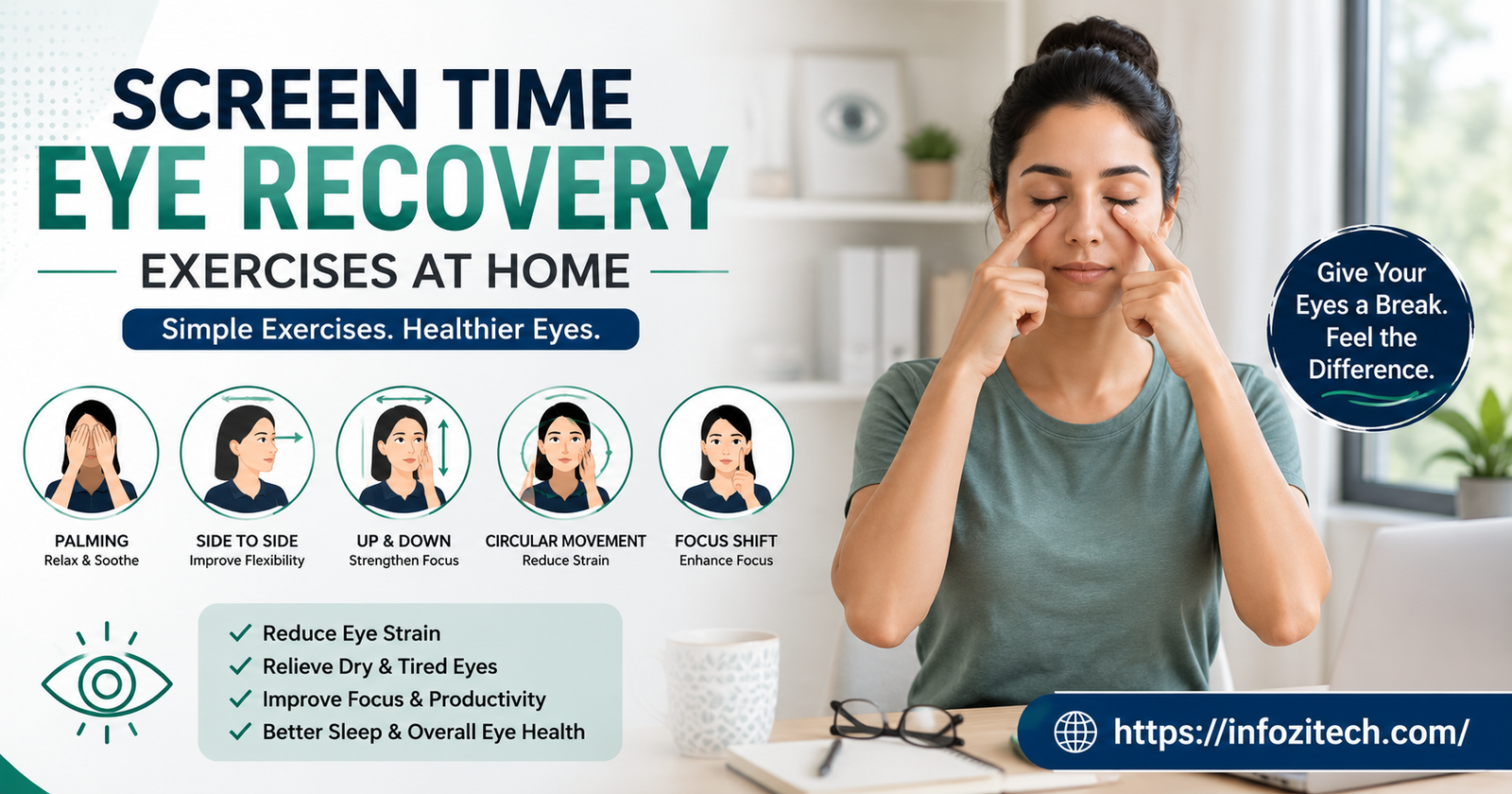
Eye Exercises That Take a Few Minutes
Beyond the 20-20-20 rule, there’s a handful of specific exercises worth doing once or twice through the day, especially if screen time’s heavy.
Focus Shifting, Near to Far
Hold a finger about ten inches from your face, focus on it, then shift focus to something across the room, back and forth, ten times. This directly exercises the focusing muscles through their full range instead of leaving them stuck at one distance all day.
Figure Eight Eye Movements
Picture a large figure eight a few feet in front of you, trace it slowly with just your eyes, no head movement, for about thirty seconds, then reverse direction.
Palming for a Reset
Rub your palms together to warm them up a bit, then cup them gently over closed eyes, no pressure, just blocking light completely, for twenty or thirty seconds. Simple, genuinely relaxing, and gives your eyes a full break from any light input at all, which screens obviously never provide.
Deliberate Full Blinks
Sounds almost too basic to count as an exercise, but a set of ten slow, complete blinks, really closing all the way each time, resets tear distribution across the eye surface in a way partial screen-blinks just don’t manage.
Setting Up Your Space So Your Eyes Don’t Have to Fight It
Exercises help undo strain, but a few setup changes reduce how much strain builds up in the first place, which honestly matters just as much.
Screen Distance and Height
Your screen should sit about an arm’s length away, top of the screen roughly at eye level or slightly below. Too close forces your focusing muscles to work harder than they need to, and too high or too low creates neck strain that somehow tends to make eye fatigue feel worse too, even though it’s a different body part entirely.
Lighting Matters More Than People Assume
Working in a dark room with just a bright screen is rough on your eyes; that contrast forces constant adjustment. Similarly, screen glare from a window or overhead light behind you causes squinting without you fully noticing it’s happening. Even moderate room lighting, screen brightness matched roughly to the room around it, is the actual target here.
Text Size and Screen Brightness
If you’re squinting to read small text, that’s straining your eyes for no good reason; bump the font size up instead of powering through it. Same logic for brightness, matched to your room rather than cranked all the way up out of habit.
Building Eye Care Into a Regular Habit
None of this sticks if it depends on remembering to do it manually every single time, so building it into something automatic matters.
Use Reminders, at Least at First
A phone timer, a sticky note, whatever gets your attention every twenty minutes or so until the habit’s actually formed. After a few weeks it starts happening more naturally, but almost nobody just remembers on their own from day one.
Tie It to Something You Already Do
Every time you refill your water glass, every time a meeting ends, whatever recurring thing already happens through your day, tie an eye break to it. Piggybacking a new habit onto an existing one sticks far better than trying to build it from scratch.
Don’t Skip Actual Rest, Not Just Micro-Breaks
The exercises above help through the day, but your eyes still need real downtime, evenings without screens if you can manage it, or at least significantly reduced screen time in the hour before bed. Micro-breaks reduce strain; they don’t replace the need for actual recovery time.
When It’s More Than Just Screen Fatigue
Most eye strain from screens responds well to the stuff above. Occasionally it’s a sign of something that needs an actual eye exam instead.
Persistent Blur or Headaches Worth Checking
If blurriness or headaches are showing up consistently, not just at the end of a long day but regularly, that’s worth an actual visit to an eye doctor rather than more home exercises. Could just be that your prescription’s changed, or it needs one for the first time.
Dryness That Doesn’t Respond to Blinking More
If your eyes stay persistently dry and gritty even after consistent blink breaks and the other stuff here, artificial tears or a conversation.
Final Thoughts
Screen time eye recovery exercises at home don’t need to be complicated; mostly it’s just remembering to look away, blink fully, and give your focusing muscles some variety through the day instead of leaving them locked at one distance for hours straight. . Small, consistent habits here, and that gritty, burnt-out feeling by late afternoon mostly just stops showing up.







2 thoughts on “Screen Time Eye Recovery Exercises at Home”